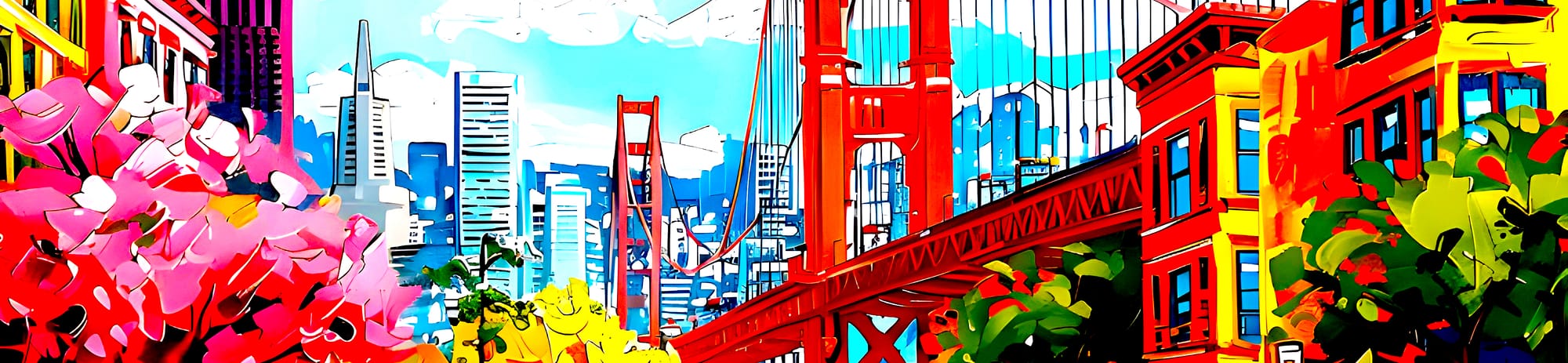

San Francisco’s urban landscape is in serious flux. Just look at the new commercial and residential additions along Market Street or throughout Mission Bay. Downtown is rapidly transforming to meet the needs of the emerging economy and its high-tech workforce, and it’s altering the fabric of our city.
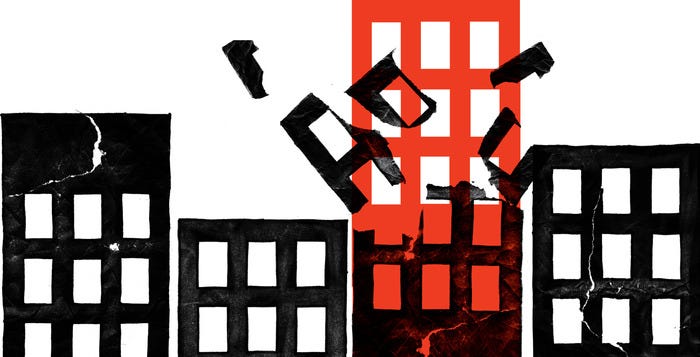
Yet even with the tidal wave of techie newcomers, an infusion of
brand-new high-rises, and a focus on renewing certain blocks, pockets
of our city are suffering from intense physical blight, social strife, and
a depressed economic outlook. Despite the city’s stimulus to redevelop
downtown, as well as the fast-approaching workforce, vacancies and
idle buildings are prevalent, even in the center of downtown. You’ve
seen them — the boarded-up facades, empty big-window storefronts,
and gated doors of retired businesses throughout Mid-Market and
the surrounding neighborhoods. The future plans for these buildings
vary widely. Some owners have grand dreams for their fixer-uppers,
while others are waiting for a tech startup to buy them out for office
space, and still others are sitting on the land until something strikes
their fancy. It’s difficult to tell. (But if you want to know more about the
history and current status of buildings, OEWD should have the scoop).
What I can say is that there’s a growing trend toward activating idle
spaces in San Francisco and creating urban interventions that make city
life better and more inclusive. A creative civic spirit is very much alive here.
It has to be. The changing demands on our urban landscape are pushing
us toward thinking strategically and optimistically about how to adapt.

Those who are passionate about urban interventions are often engaged, socially minded citizens entirely unrelated to traditional redevelopment firms and city-planning departments. They are average San Franciscans. Whether they’re called civic innovators or civic hackers, they wish to better their city in some way. Operating at the intersection of community mobilization, entrepreneurialism, space experimentation, and artistic expression, they have launched urban-revitalization efforts that are quite diverse. It spans from tactical urbanism stunts such as yarn bombing to urban improvements such as Rebar’s parklets to Urban Prototyping festivals that promote citizen-led urban-design projects for the public realm to online platforms such as Neighborland, which enables people to improve their neighborhoods and organizations to connect with their communities.
I’ve lived in San Francisco for four years, and I’m consistently mesmerized by how quickly things shift here, from rents to incomes. Curious about San Francisco’s makeup and all the property signs I’d seen in the storefronts downtown, I attended last year’s Creative Currency hackathon, a platform for civic hacking where people work together quickly and creatively to help improve their community, city, or government. The event brought together 150 San Franciscans to take part in the revitalization efforts in the Mid-Market area. We were tasked with envisioning, prototyping, and designing innovative solutions that reimagined our systems of exchange from the ground up.
Now I’m no expert in San Francisco history. I’ve never studied urban
planning, and I can’t craft architectural drawings that are in any way
realistic or proportional. I’ve worked on a few community-development
projects, but they were all related to rural populations. And I couldn’t
code if my life depended on it. So what the hell was I doing at a civic
hackathon? Well, I’m a design consultant by day and a muralist by night.
I have a background in cultural anthropology, and I’m a die-hard SPUR fan
(no, that’s not a sports team). I’m passionate about the city that I’m lucky
to call home. I care about San Francisco’s future. For all these reasons
and more, I attended the hackathon.
My team of five was intrigued by all the blight in the Tenderloin and the
surrounding area, particularly the inactive buildings lining the Market Street
corridor from Fifth to Tenth Streets. Market Street is San Francisco’s heart,
the main thoroughfare that cuts straight through its core. How is it that this
area has been seemingly forgotten, so down-and-out?
At the time of the event, the area suffered from higher vacancy rates than
any other commercial corridor in San Francisco. Yet it also had one of the
lowest rents per square foot in the city. (I’m well aware that this has since
changed, that office spaces are now going like hotcakes, and that efficiency
studios in the Tenderloin are the “new thing” — go figure). So there were tons
of idle spaces, and the spaces didn’t cost that much. At the same time,
there were many people in the city who wanted spaces for their commercial
and creative endeavors but couldn’t find or afford them, such as the aspiring
chef from La Cocina who dreamed of her first restaurant or the local artist
who wished to display his paintings in a gallery space. The available space
and the people weren’t connecting.
My hackathon team saw opportunity in these challenged streets. Over the course of the 48-hour event, we created SquareFoot, an online platform that connects entrepreneurial renters to short-term leases in idle spaces. Through the platform, we sought to lower the barriers to entry for people excited to make use of idle or empty buildings and to help create more commercially viable experiences and vibrant neighborhoods. We believed there to be enormous potential in un-tapped space, Our first assignment post-hackathon: a Mid-Market hack.
Our civic hack, an all-day event called “By the SQFT,” included a series of pop-ups that activated Market Street from Fifth to Seventh Streets. Still in the learning stage, we wanted to prototype a wide variety of activities. A cafe popped up at an SF Chronicle newsstand kiosk hosting a bike-repair station by Huckleberry Bicycles; an outdoor sidewalk market displayed wares from local artisans and shopkeepers; a sidewalk came alive with a mobile library in collaboration with the San Francisco Public Library; a yoga class took place in the GAFFTA office; and people let loose at a game night in the commissary kitchen at SF FoodLab. Over 500 people attended, and that stretch of Market Street felt alive. Local business owners and residents alike said they wanted to see the street charged with so much energy more often.
In planning and running this event, we met many future collaborators. One such partner was Brian De Lowe, whose firm manages the Renoir Hotel at Sixth and Market Streets. His own neighborhood-revitalization efforts at
A Temporary Offering (ATO) were complemented by SquareFoot’s, so we spent 10 weeks last fall launching food, art, and retail offerings in one of the ground-floor restaurant spaces of the hotel. Together we hacked Market Street, bringing to life a building and its surrounding sidewalks to demonstrate how a space that was once vacant could become vibrant.

Recently, this creative civic-hacking spirit was very much alive
at [ freespace ], a once-idle warehouse space near the corner of Mission
and Seventh Streets. This building became a cultural center in the heart
of San Francisco with creative programming and community initiatives,
including a newly piloted bike-share program, a Learning Shelter
program offering classes to the homeless, and a community garden.
Both [ freespace ] and SquareFoot operated in what appears to be
the nexus of space activation and neighborhood revitalization — the
Tenderloin, Mid-Market, and SOMA areas. Perhaps it’s because here,
large-scale urban change is happening most rapidly.
Yet hackathoners and civically engaged citizens aren’t the only ones
responding to the changes in our urban landscape. A growing group
of city and civic-minded entities, including the Mayor’s Office of Civic
Innovation, the Office of Economic and Workforce Development and the
Central Market Partnership, Code for America, and Better Market Street,
among others, are spearheading efforts in San Francisco. This effort is
exciting, but the challenge we all face is that city policies, regulations
around zoning and permitting, and bureaucracy are slow to adapt. I’m
hardly suggesting that we all go rogue in our civic-hacking endeavors —
it’s important to learn from and understand the ongoing efforts of
government and local organizations — but there’s no need to wait for
years for institutionalized, industrial change to happen. It can happen
today in the hands of the everyman — you and me.
So what is the future of our city? Heck, you tell me. All of us have the
power to see what’s around us, dream up new realities, and take action
to transform our city. After all, it’s the people occupying the city who
make it a vibrant place. Decide how you wish to live, work, eat, create
and play, and make it happen. I believe there’s no better time than now.

If you’d like to take part in shaping your urban reality, here are a few things you can do:
- Share your ideas for making your neighborhood better
- Read up on civic hacking
- Attend a hackathon, an unhackathon (yes, there’s such a thing), a SPUR event, or a Better Market Street workshop
- Put those tech skills to good civic use in one of Code for America’s programs
- Learn how to secure and activate an idle building
But ultimately, get out into the city and explore. You’re bound to come across street after street of opportunity.
This story is part of The Bold Italic’s Facing Change package. Read more about the series here.
The Bold Italic is a not-for-profit media organization, and we publish first-person perspectives about San Francisco and the Bay Area. We operate under a fiscal sponsorship of a 501(c)(3).
You can become a paid subscriber. Or donate. Or learn more about us.