

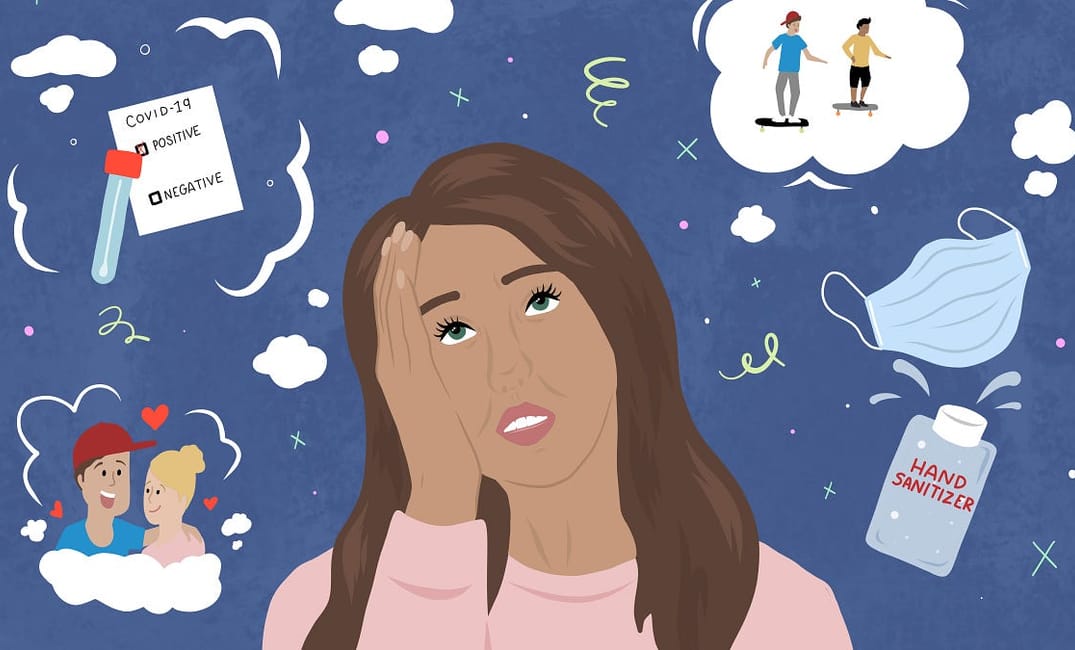
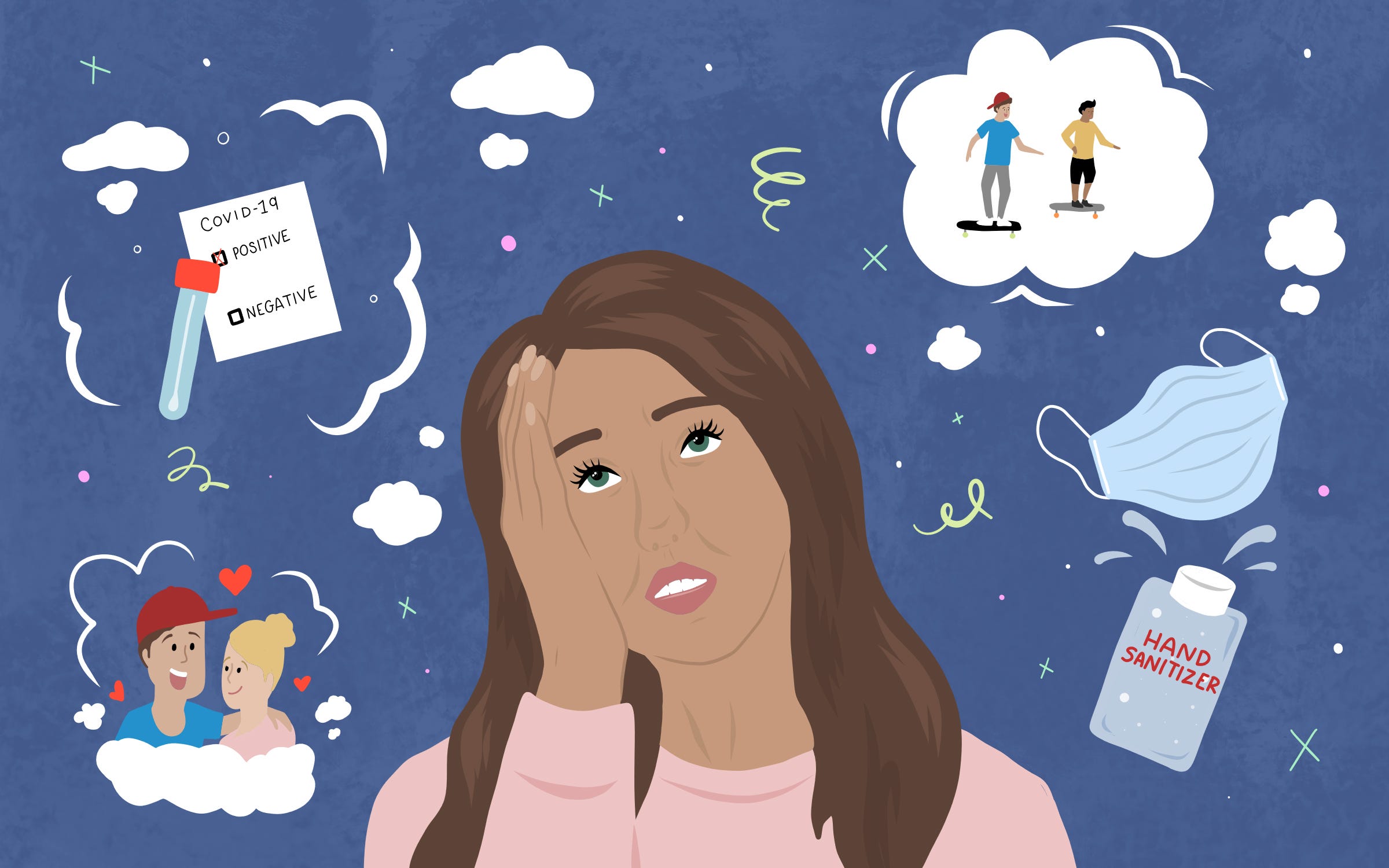
It’s been 10 long months of social distancing, quarantining, and remote schooling. To kids, it’s been like a solitary confinement sentence. For my two teenagers, it’s caused them sadness, loneliness, and despair. In time, I realized complete isolation wasn’t sustainable if I wanted them to maintain some amount of positive mental health.
Our family has a history of depression and even suicide, so I don’t take matters affecting mental health lightly. After the first four months of total lockdown, we allowed the kids to see friends outside for things like beach walks, hanging out on the beach six feet apart, surfing, skateboarding, bike rides, hikes, and hanging out on our outdoor patio six feet apart. Never have I felt so lucky to live in California.
I recently read a New York Times op-ed, “I Hate The Mom That Covid Has Made Me,” going around on social in which writer Kristen Howerton laments the moral dilemma of letting her children hang out with friends at the skate park and all the obsessive nagging required to allow it. Howerton writes:
The longer they are gone the more a nag begins to build in my mind. Are they really leaving those masks on? They are the only kids I’ve ever seen wearing them at that park. Are they going to be responsible, or will they bend to social pressure? Am I doing the right thing letting them go? Is this really safe? Am I going to catch Covid because I let them go skating?
In wanting so badly to give our kids some semblance of normalcy, many of us parents have become paranoid police guards. Like this mother, I have many times driven past the park where my son is to make sure he is, in fact, wearing a mask as he committed to do.
Howerton confides, “I don’t want to be a mom who spies on her kids. I don’t want to be a mom who yells in public. And yet, here I am.”
Sing it, sister. In making these choices, we have had to compensate for the increased risk. It has made some of us the kind of mothers we never envisioned we would be.
Recently, when I drove by my son skateboarding in the parking lot of a local elementary school with his friends, his mask hung around his neck. None of his other friends were wearing them. I didn’t scream, but I called him and sternly told him he could either put it on or get in my car. My voice raised and I was irritable. I couldn’t keep my cool because I know what is at stake. The past year has just been full of good times like these.
Sign up for The Bold Italic newsletter to get the best of the Bay Area in your inbox every week.
On New Year’s Eve, my son said he was invited to someone’s house for an outdoor gathering with a handful of kids. He makes friends everywhere he goes, so we didn’t know this particular family. I asked for the mother’s phone number. She assured me that the kids would stay outside and that if my son needed to come in to use the bathroom, she would make sure he was wearing a mask. My husband and I deliberated. “Okay,” we said, “you can go if you commit to us that you will stay outside and you will wear a mask.” My son quickly agreed. We reiterated, “You promise you will stay outside and wear a mask?” Absolutely yes, he swore, “I always do.”
For the first time in our adult life, we didn’t have any plans for New Year’s Eve. Even our rule-following 16-year old daughter had turned down several invitations because of Covid. I drank a vodka soda with lime and played my husband in a game of backgammon when my 10-year-old exclaimed, “Sarah says on TikTok that she probably has Covid because Maeve has Covid!”
Womp womp.
Sarah is the twin sister of one of my son’s closest friends, with whom he’d regularly been bike riding and skateboarding. “I’ll go get him right now,” my husband said as I sent off a text to the mother who is hosting my son: “I think he has been exposed to Covid. My husband is on his way.”
The following morning, I make an appointment for my son and my husband (since he is driving, why not?), to get rapid Covid tests for $475 each at the nearest drive-through testing center. When they return, we are all sitting outside when the test results come in via text. Negative, my husband says. I get the text with our son’s result on my phone. Positive. Ugh.
Until now, it was a hypothetical. But as the reality slowly percolates, I realize that my two daughters and I also have to get tested. Our son is confined in his room, which luckily has an exterior entrance and its own bathroom. He isn’t allowed in any other part of the house.
The girls and I make appointments and go for our $475 rapid tests, “for peace of mind,” or so I think. Our 10-year-old is negative. Phew. But my 16-year-old—who followed all the rules—and I are both positive. “It’s not fair!” wails my daughter, “I didn’t do anything risky!” And then it all comes out.
Since she most likely got it from picking him up in her car a few times in the past week, she turns on him and starts listing all his transgressions: “When I picked him up from Maeve’s, he said he was outside just skating on the halfpipe, but he came out from inside!”; “When I picked him up at the park, he wasn’t even wearing a mask”; “I heard he has been kissing girls, during Covid.”
Yes, we probably did get it from his noncompliant behavior, but he is 14, and an immature boy who can barely remember to flush the toilet. I’m not excusing it because I went through all the stages of grief on this one. I was angry. I blamed. I lamented my bad parenting and lack of control. Then I empathized.
As frustrating as his “breaking of the rules” is, he is a kid and he has been suffering. We’re all doing the best we can. I think the best thing I can do right now is support him and love him unconditionally. I understand why this happened, and it’s hard to blame him. When I saw “Why the Teenage Brain Pushes Young People to Ignore Virus Restrictions” in the Wall Street Journal, it gave me a sense of calm.
So my son, my daughter, and I are Covid positive. Now what?
The Bold Italic is a not-for-profit media organization, and we publish first-person perspectives about San Francisco and the Bay Area. We operate under a fiscal sponsorship of a 501(c)(3).
You can become a paid subscriber. Or donate. Or learn more about us.