

Like many a bridge and BART user, I rarely think about ferries as a viable mode of transport for my North Oakland to downtown SF commute. I’m also lucky enough to not deal with delayed busses and crowded Muni stops as tech shuttles wind their way through town. But as Oakland and San Francisco combat different tech boom-related headaches, there hasn’t been much buzz from either locale about whether tech companies are taking over the estuary.
Google wrapped up the second wave of a pilot commute program last week, shuttling employees across the Bay by ferry to its Silicon Valley campus. The week-long trial picked up passengers at Water Emergency Transportation Authority’s (WETA) terminal in Alameda for a jettison to Redwood City.
The East Bay pilot program followed a month-long trial in January, where a 149-passenger private, high-speed catamaran ferried employees to and from San Francisco and Redwood City four times a day. Google had no comment about the success of either ferry program but is evaluating its scalability. Meanwhile, WETA Executive Director said, “The Google private ferry service can be a complement to the public service provided by WETA and other Bay Area ferry services.”
Google paid to lessen some of the issues with private contracting on public waters — $275 per landing to WETA for the East Bay service, $95 per landing in Redwood City, a docking fee at the Port of San Francisco, plus costs for parking and shuttles at the peninsula port — but the service is bound to be compared to Google’s widely disparaged bus program. Long term, the Google ferry sets a precedent for other wealthy companies who might want to operate their own private ferry service rather than paying to strengthen existing transit systems by offering commute subsidies, a la Genentech.
If Google implements ferry service in a major way, it’s possible that ridership will skyrocket, causing all the ugly side effects of the Google busses at a faster pace. But I’m more inclined to think that ferry service will be a good thing: taking the crush off roads and public transit. At most, though, it will continue the wave of gentrification that promises to unfold, until city officials take action to undo problematic policies such as the Ellis Act. In the meantime, an environmental impact report is needed to address possible issues with regular ferry service, with particular focus on delicate wetlands surrounding the Redwood City landing.
WETA and Google have said they are committed to not inconveniencing Bay Area commuters, though Google crossed that line long ago. But until the majority of Bay Area commuters return to the pre-bridge tradition of ferry commuting, ferry service is a smart move by the Google machine, providing a much needed alternative to a transit system that lacks sufficient infrastructure to support an industry boom that shows no signs of slowing.
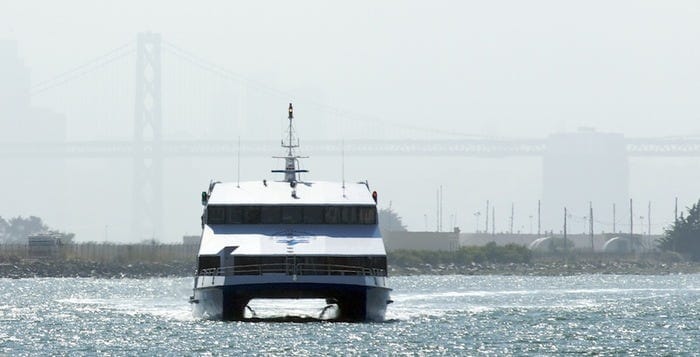
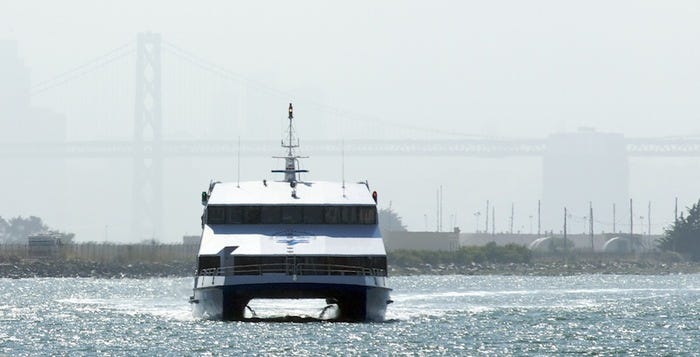
Image (not of an actual Google ferry) by mnorri via Flickr
The Bold Italic is a not-for-profit media organization, and we publish first-person perspectives about San Francisco and the Bay Area. We operate under a fiscal sponsorship of a 501(c)(3).
You can become a paid subscriber. Or donate. Or learn more about us.