

The Bold Italic is a scrappy website that launched at the end of the 2000s. The iPhone only existed for two years at that point, so modern video watching, Instagram, and mobile-forward websites had yet to enter the mainstream. This original iteration of TBI was part of a small cohort that truly embodied the term "online magazine."
It then shut down, which is when these two techies bought it. Sunil Rajaraman and Sonia Arrison paid an "undisclosed sum" to OG founders Gannett and IDEO. Then they decided to port over at least 2,500 articles, listicles, and first-person essays to the blogging platform, Medium.

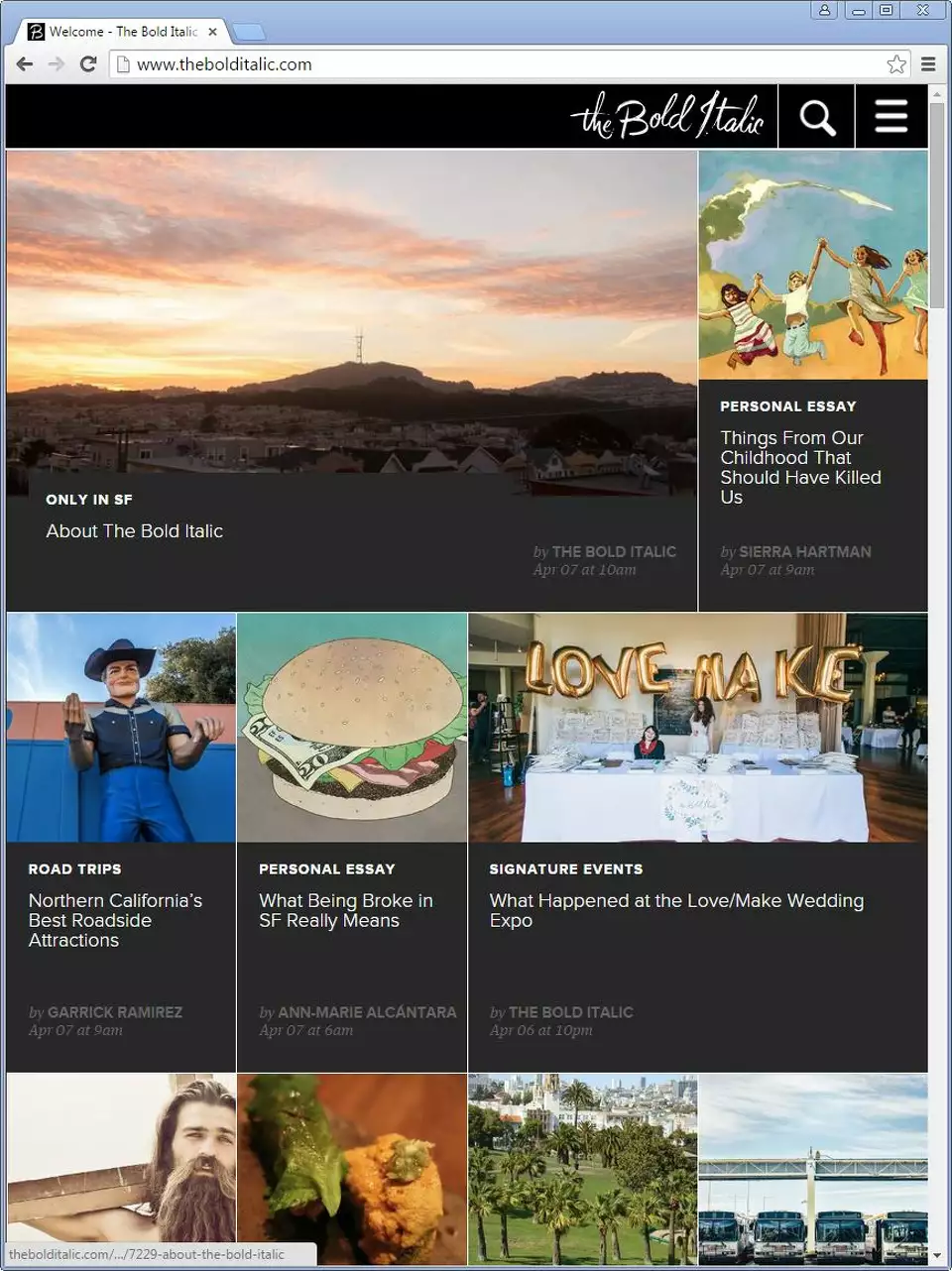
I have middling opinions about platforms like Medium. In the 2000s, it was an easy way to blog on LiveJournal, Xanga, Diaryland, and Blogger. But corporate muckety mucks, as they're wont to do, monetized the practice and created walled gardens. For Medium, this meant The Bold Italic couldn't run banner ads. We also didn't have access to Google Analytics, and URLs had weird database markup letters, numbers, and dashes. Gone, also, were the custom magazine-like layouts that really made TBI what it was in its original heyday.
But never mind all that; we must have been a real ratings win for Medium because they bought The Bold Italic outright. It was only the second time for Medium to buy a publication instead of building one in-house. But I guess that didn't go very well.
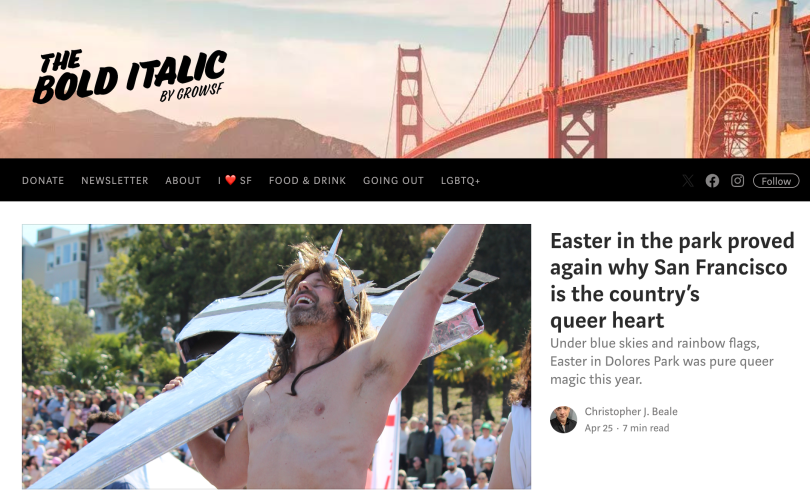
Medium owned it from 2019 to 2022, then notably gave it away to my former bosses–a local political action committee–for free. So I inherited a real behind-the-scenes peek at how well-run and "successful" this whole operation was at the time I came on as editor-in-chief in 2023. The website had maybe 50,000 to 75,000 views monthly, although it was impossible to know from Medium's metrics how much of that was bot traffic from China and Singapore.
In writing this tonight, I read a fair amount of snark in SFist's comments. One that stuck with me said, "They did not have a clue about how to monetize the site. Sadly, that can't be an afterthought in this day and age."
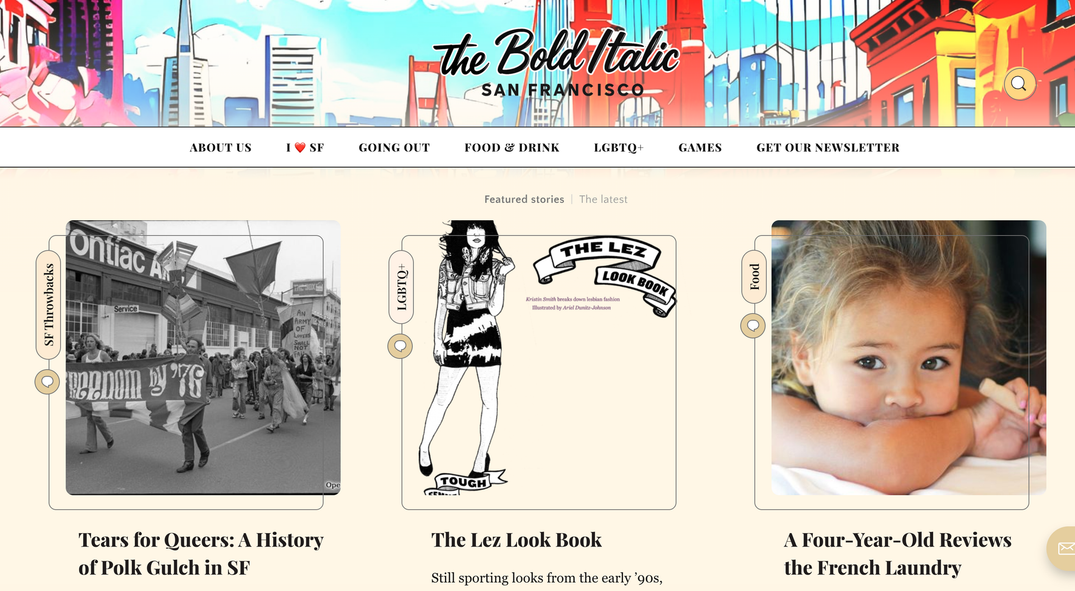
Agreed. Not that web monetization was especially wise when I became owner in 2025. But I knew we'd have no shot at doing it if we stayed on Medium. I didn't really know where to take it, but Ghost appealed to me as a non-Nazi-promoting platform and as one with a concierge team that would help me move. Plus its ecosystem included template designers that ultimately made for a very custom-looking website.
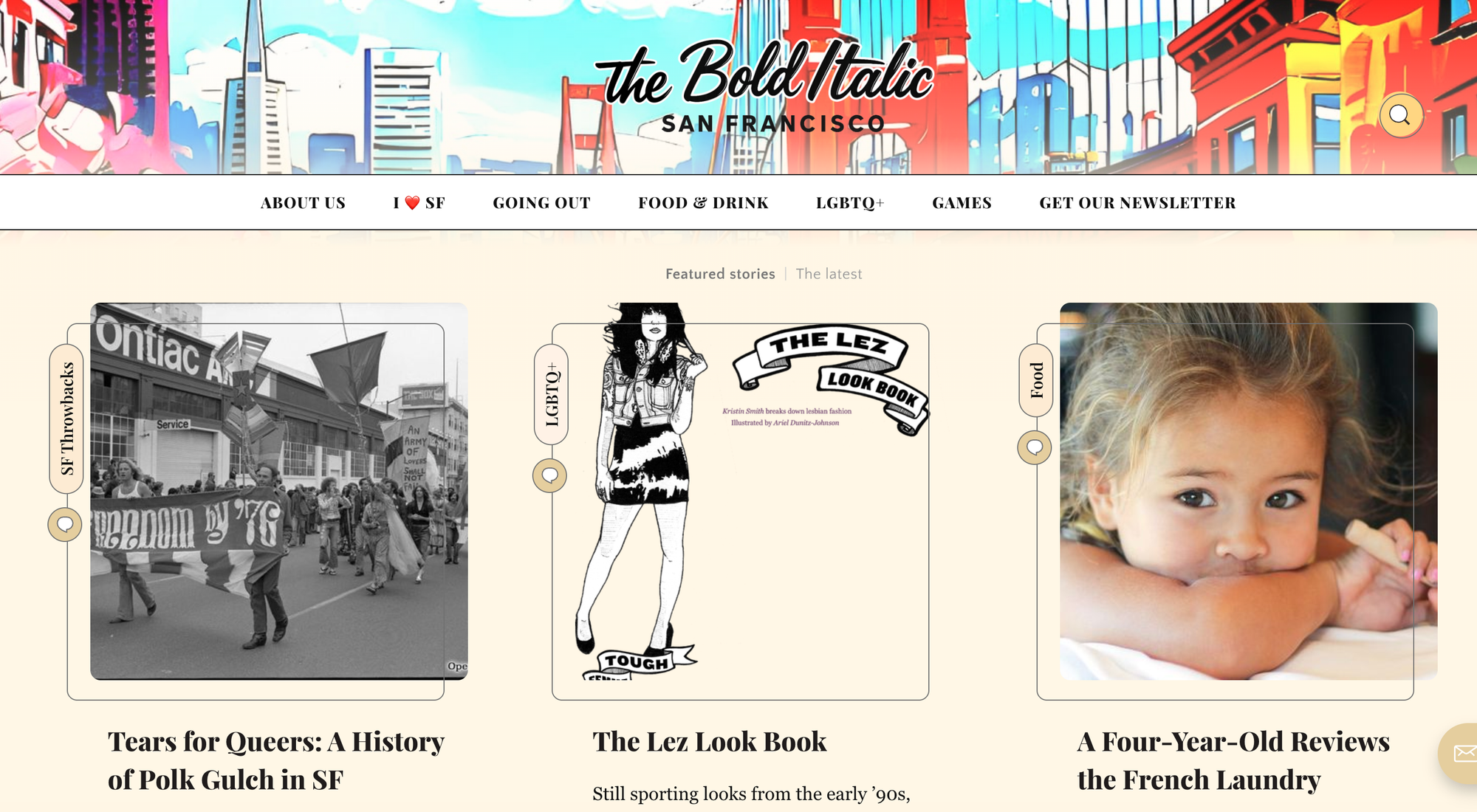
What the actual transition was like to Ghost
By the time I moved the library, there were about 4,500 stories, and they'd already been moved once from The Bold Italic's original website. Modern builds like Medium put author bylines in their own user accounts, but since the archive predated this practice from 2009-15, many authors simply read as "written by The Bold Italic". The byline was shoved inside the body text itself.
You think of an article essentially as text and photos, but really it's all sorts of things. Image galleries, drop caps, line breaks, pullout quotes, shirttails, author pages, headlines, subheds, deks. The people touching this data are not editors, and engineers only care to a point. The ones for Ghost appear to be based in Europe. They scripted a number of imperfect migrations. Headlines and header images duplicated. In about 10 instances, the author's byline was the headline.
I don't blame the people at Ghost because again, the migration data was a mutation of a mutation. But it made life difficult for nearly a year.
The AI of it all
I would not have been able to accomplish what I did, alone, without the help of AI. And I should note here their primary function has been coding, not writing. After buying and implementing a theme by EstudioPatagon, my boyfriend noticed the preview boxes on the homepage floated around inconsistently as part of their "charm." Likewise there were just dozens of things; my two-year tenure under a political action committee included me placing in shirttails to each story that said "Brought to you by" said bosses. I wanted those gone. The website was also replete with "subscribe here" links that directed people to long-defunct Mailchimp pages. Link rot is still a huge challenge for The Bold Italic.
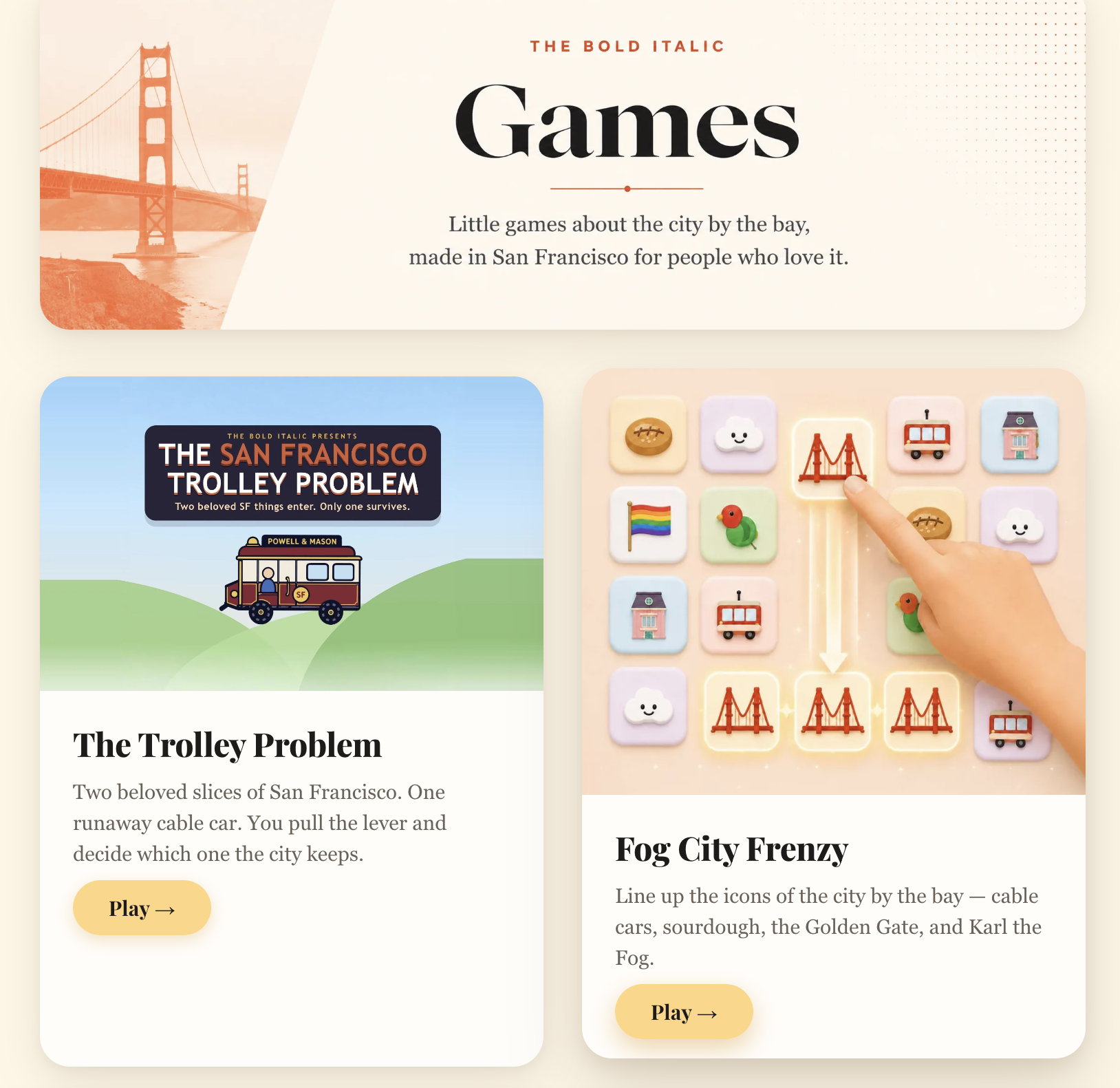
At first, GPT and Gemini coded javascripts that painted over these things. But since early 2026 I've instead been using Claude, perhaps the first tool I've seen capable of deep vetting the entire archive and implementing site-wide changes in a matter of minutes. I have not only eliminated many dead links, I've also restored so many author bylines from the original era of The Bold Italic. I fixed the quirky square grid on the homepage. I created an entire events page, and I've added little games.
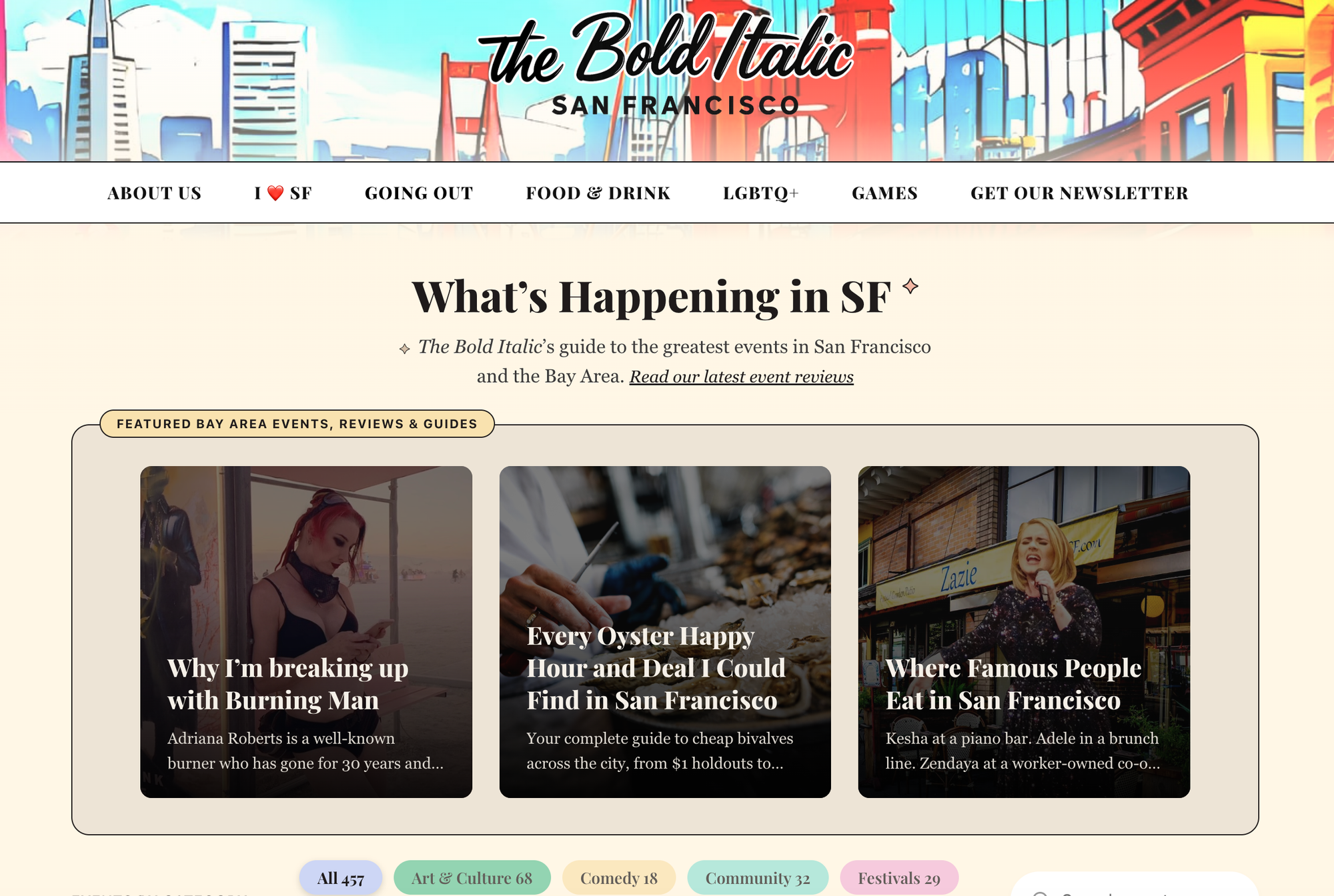
I've also been able to–finally–implement Google Analytics, which paved the way toward monetization. Squeaking by with just enough views, I have been able to activate premium advertising through Mediavine. Here, too, Claude has been handy in helping me curate ad placement so that it looks integrated with the website.
Why not WordPress
Nobody asked me but I've used WordPress since about 2010. It's a terribly over bloated platform that relies on plugins that never seem to get along with each other. People always tell me it's great for SEO. I mean, Sure Jan. I've never seen that. I don't hate WordPress but it's also never been great to me.
What Medium has that Ghost doesn't
Ghost, Substack, and Patreon are all subscriber-driven platforms that rely on modern relationships between consumer and creator. Medium, on the other hand, is more like a home-brew publishing platform that shares its premium revenue with writers. I've read occasional success stories. It's just not my bag. I also don't like how so many of these platforms, including Medium, keep a stranglehold on your content even though they claim to be made in the interest of writers. Yeah then why was it unbelievably difficult to delete and de-list my stories?
Would I recommend Ghost?
Yes, but mostly for platforms either smaller or bigger than The Bold Italic. As an email service, you pay for how many subscribers receiving your newsletters. (Not unlike Mailchimp.) As a very small creator, like 1,000-2,000 on a mailing list, that's not going to cost you a lot. For someone our size, we're paying about $1,700 annual to send to a large subscriber base. Our paid subscriptions are really very tiny, and they cover our annual fees, but not much in profit beyond that at this point.
At the time I moved to Ghost, though, I considered this payment model superior to Substack, which takes a 10 percent cut. So in some insanely awesome universe where I have 10,000 paying subscribers, that's $1.2 million annual. And Substack would take a whopping $120,000 of that. For what? Sending emails??
Saul Sugarman is editor-in-chief and owner of The Bold Italic.
The Bold Italic is a not-for-profit media organization, and we publish first-person perspectives about San Francisco and the Bay Area. We operate under a fiscal sponsorship of a 501(c)(3).
You can become a paid subscriber. Or donate. Or learn more about us.