
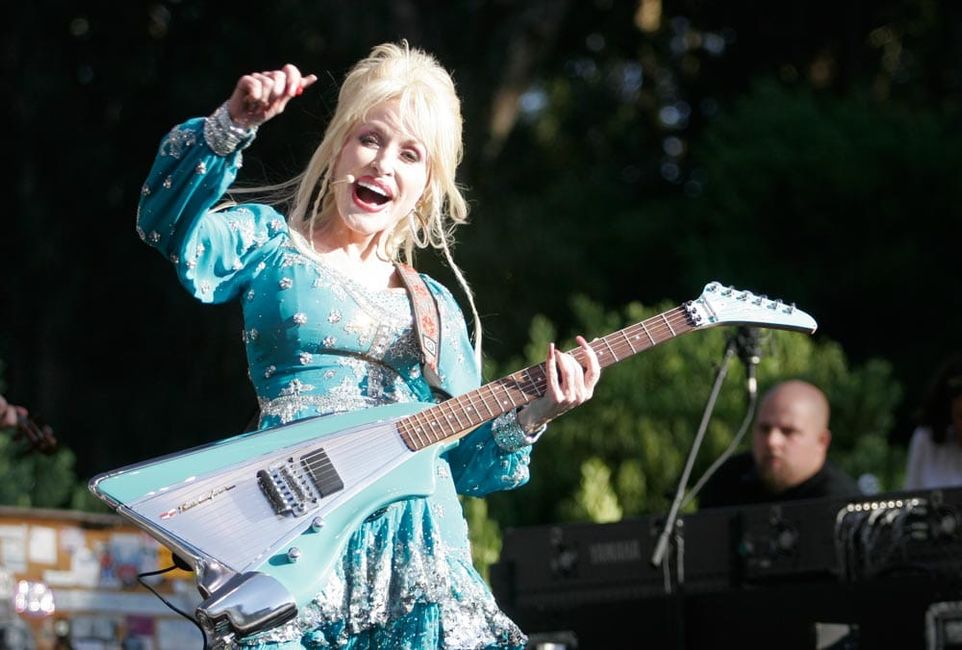
Dolly Parton, the songwriter, performer and businesswoman who turned a Smoky Mountain childhood into one of the most durable careers in American popular music, has died in her home in Nashville. She was 80.
Her nephew Bryan Seaver, who ran her security detail for two decades, announced the death in a video she had asked him to record years in advance. "She never saw a door she couldn't open," he said. No cause was given.
Dolly's time in San Francisco
She performed in the Bay Area in the last two decades, but very seldom in SF proper. A 2016 show landed her at the Shoreline Amphitheatre in Mountain View, and at roughly 20,000 seats, it was allegedly the largest room on the entire Pure & Simple tour. That tour was her last.
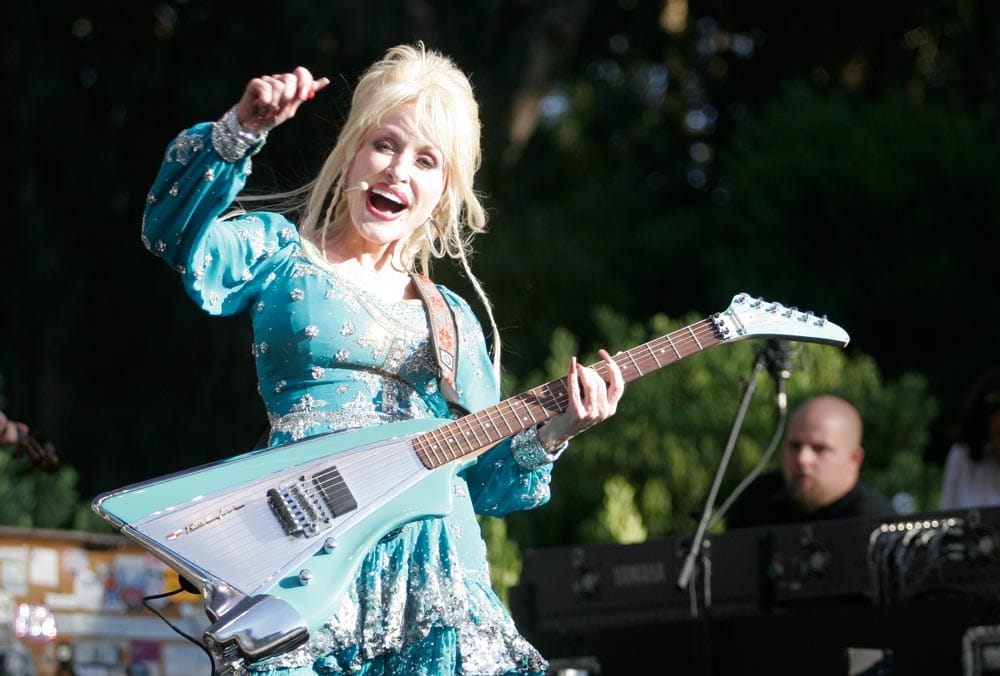
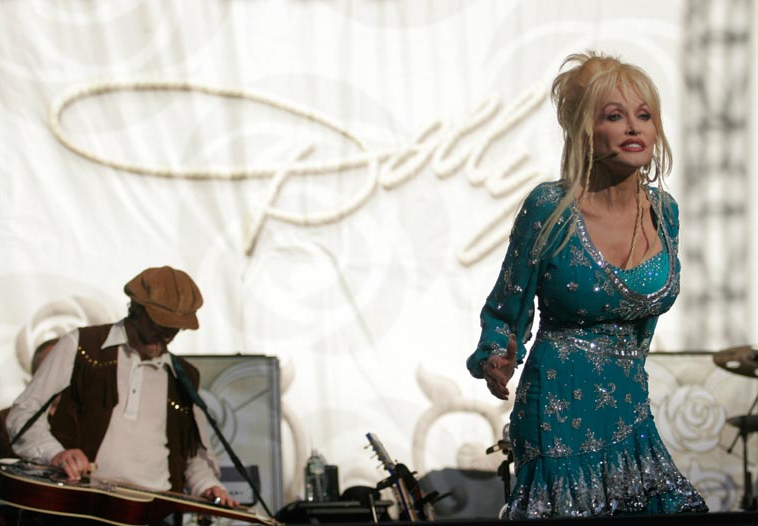
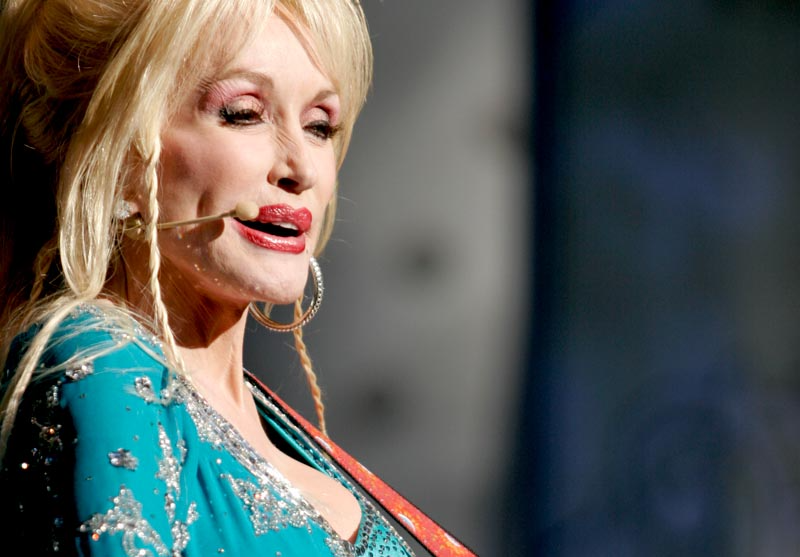
The last San Francisco performance I surfaced, however, was at 2005's Hardly Strictly Bluegrass: She arrived late and they drove her tour bus through the middle of the meadow because people were up in the trees and wouldn't move, and the soundboard died twice in the first couple of songs. She opened with "Jolene." She sang "Where Have All the Flowers Gone." And she dedicated "Me and Bobby McGee" to another lost legend, Janis Joplin.
I found the following photos of that performance from Volker Neumann via Flickr. There's also a nice collection by Philip Liborio Gangi on Dollymania.
Dolly's legacy in SF was small in comparison to her international fame and influence. But she did leave a mark here.
In the mid-1970s, Parton played the Boarding House at 960 Bush Street, a club with fewer than 300 seats where David Allen also booked Robin Williams, Bette Midler, Bob Marley and Jerry Garcia's bluegrass side project. Parton's night survives as a gray-market live recording that still circulates under the title Live at the Boarding House, San Francisco, with Linda Ronstadt turning up on harmony.
She didn't talk about San Francisco a lot. If you have heard the story that she once entered a Dolly Parton look-alike contest in the Castro and lost to a drag queen, the story is true and the location is not. She has told it dozens of times, always the same way: Halloween, a gay bar on Santa Monica Boulevard in Los Angeles, her hairdresser David talking her into it, an over-drawn beauty mark, the least applause of anyone on stage. "They just thought I was some little, short gay guy," she told ABC in 2012.
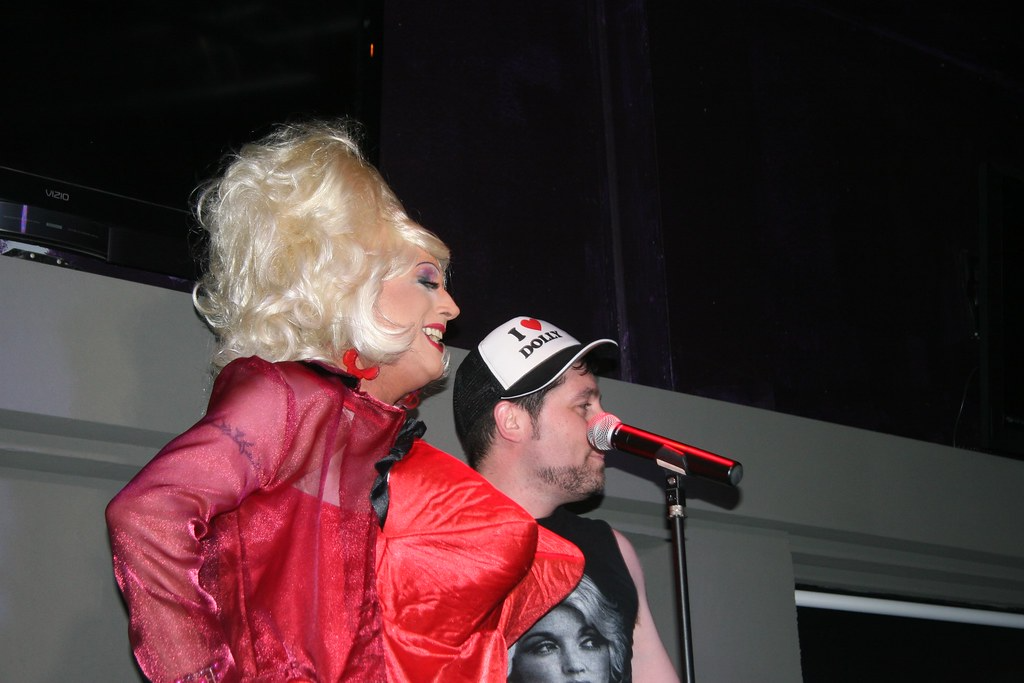
We have paid tribute to her in similar fashion over the years.
El Rio has thrown its Dolly Parton Hoot on the back patio, on and off, since 2006; the 20th ran on July 11 of this year, with a dance-off, a T-shirt contest and Jenny Hoyston's homemade remixes. Ray of Light staged 9 to 5 last fall. The Symphony ran her Threads show at Davies last August, Dolly on screen. And on June 13, the San Francisco Gay Men's Chorus closed its 48th season at the Curran with Dolly! A Pride Show, pitched with three words and a dare: rhinestones, wigs, heart, and come dressed for the look-alike contest.
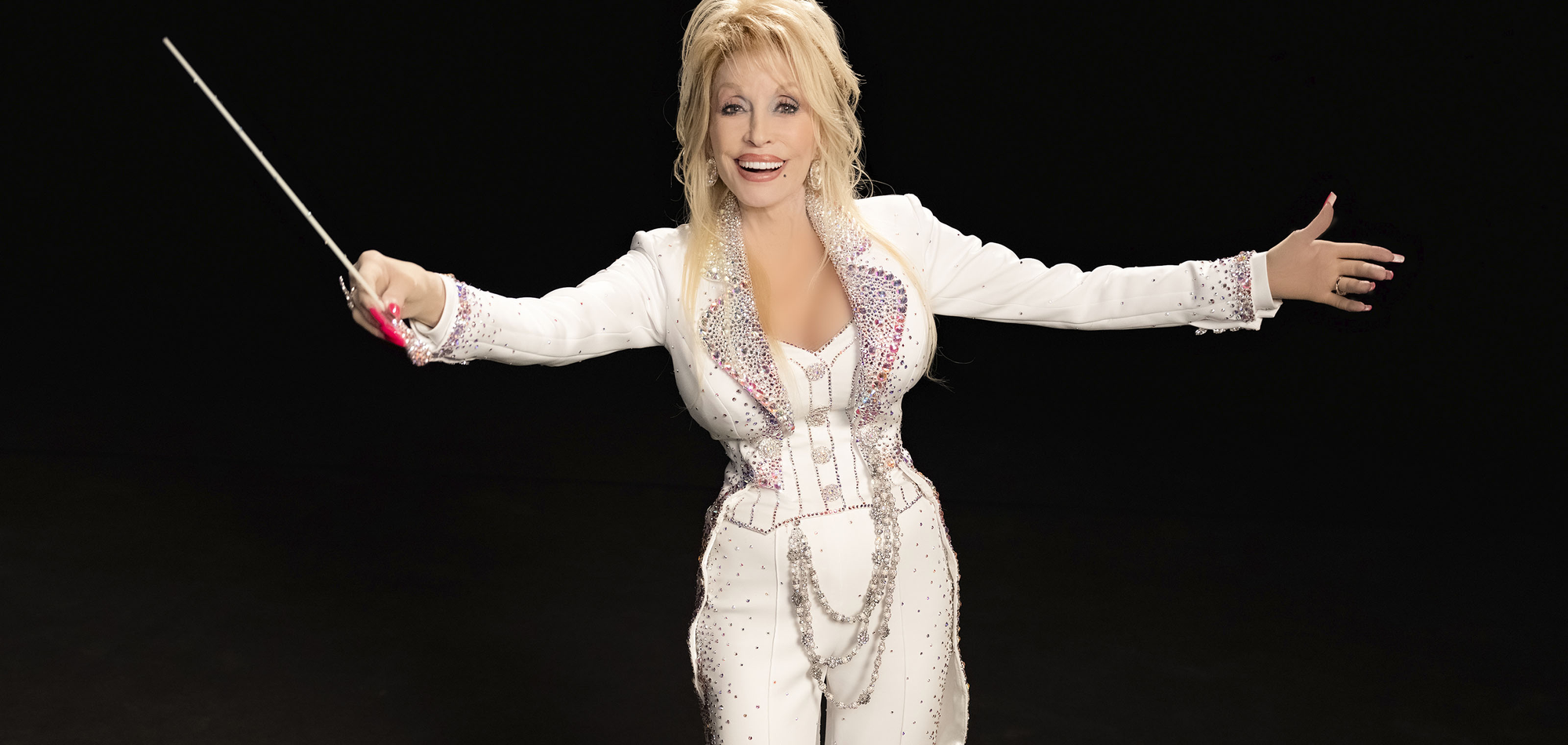
Greater impact
Dolly also inspired San Francisco children to read. About 31 years ago, she began mailing one book a month to every child under five in Sevier County, Tennessee. Her father, Robert Lee Parton, could not read or write, and she had watched what that cost a man she considered the smartest person she knew. The kids in the county started calling her the Book Lady.
She called the program the Imagination Library, and it's now all over the country. In 2022, California put forward $68 million to put the program in every city in the state, which covered half the cost. Mayor Lurie debuted it to San Francisco kids just last year.
 Daisy Nguyen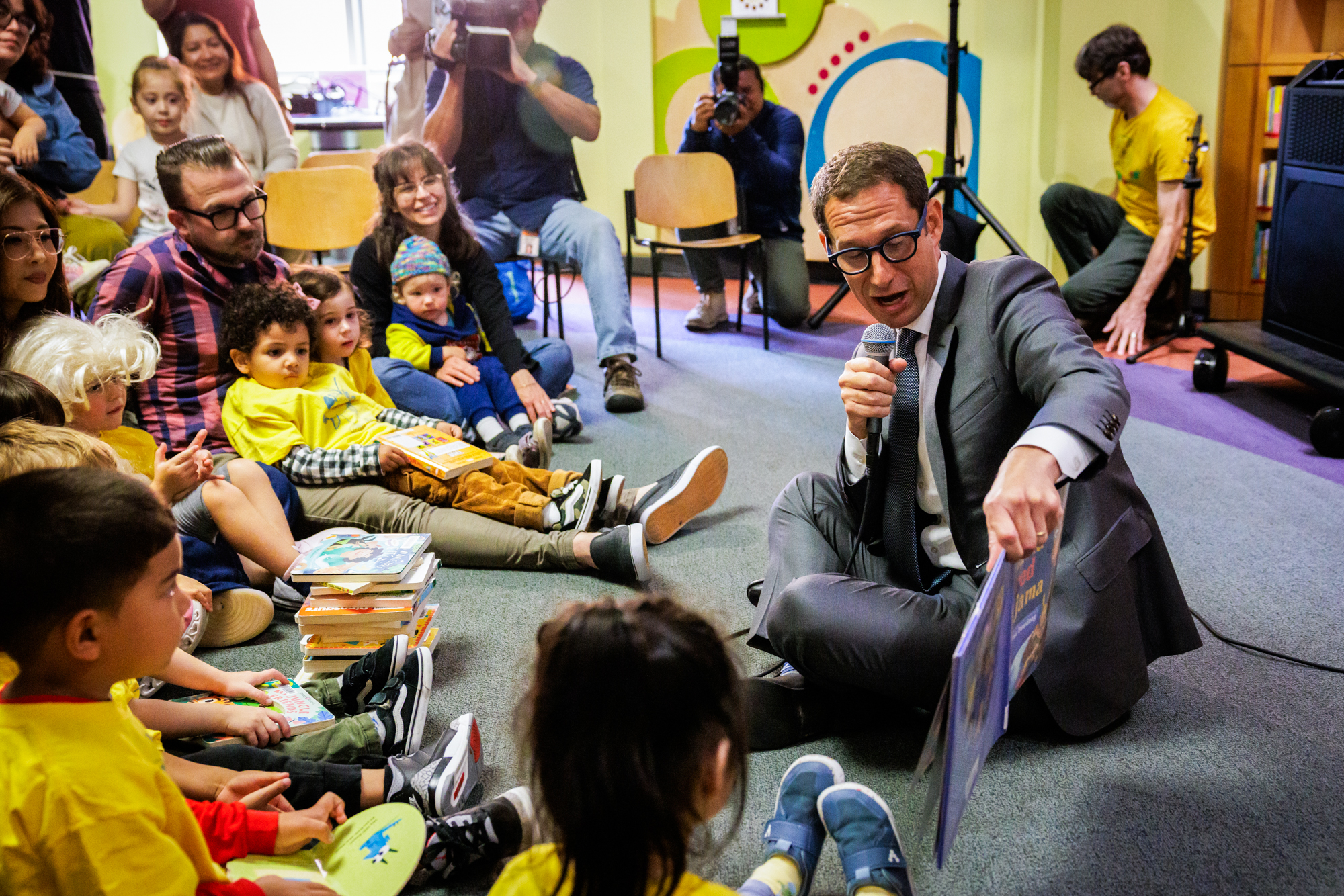
Her enduring queer connection to San Francisco
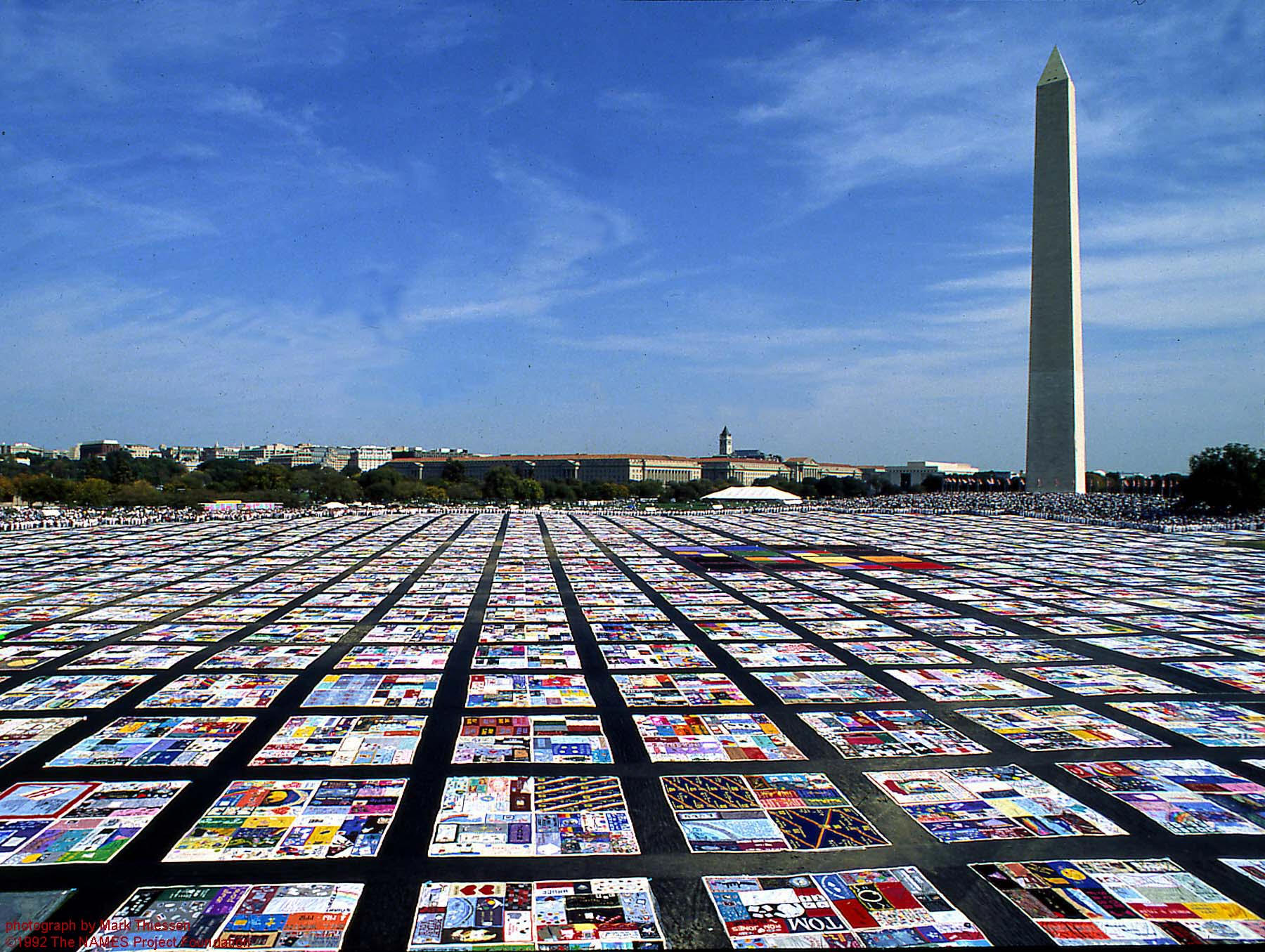
In 1985 Parton and her manager Sandy Gallin founded Sandollar Productions. Its first project that did not star her was Common Threads: Stories from the Quilt, the 1989 documentary about the NAMES Project AIDS Memorial Quilt, the thing Cleve Jones dreamed up at a 1985 candlelight march for Harvey Milk after watching people tape the names of the dead to the wall of the Federal Building on Golden Gate Avenue.
 Saul Sugarman
Rob Epstein, four years off his Oscar for The Times of Harvey Milk, directed with Jeffrey Friedman. Dustin Hoffman narrated. Bobby McFerrin scored it. Among the six lives it follows is Dr. Tom Waddell, the Olympian who founded the Gay Games in San Francisco. It won Best Documentary Feature at the 1990 Academy Awards.
This was a country singer from East Tennessee putting her company's name on a film about dead gay men in 1989, when the president had only recently started saying the word. Sandollar also produced Harvey Fierstein's Tidy Endings for HBO the year before.
She kept standing up for the LGBTQ+ community afterward.
In 2005 she wrote "Travelin' Thru" for Transamerica, a road movie about a trans woman meeting the son she didn't know she had, drawing on a friend and a relative who are trans. It got her a second Oscar nomination, after "9 to 5," and it got her death threats and hate mail, which she mentioned to USA Today at the time and then moved past. In 2017 she recorded "Rainbowland" with her goddaughter Miley Cyrus; in 2023 a Wisconsin school district pulled it from a first-grade spring concert for being controversial, along with "The Rainbow Connection."
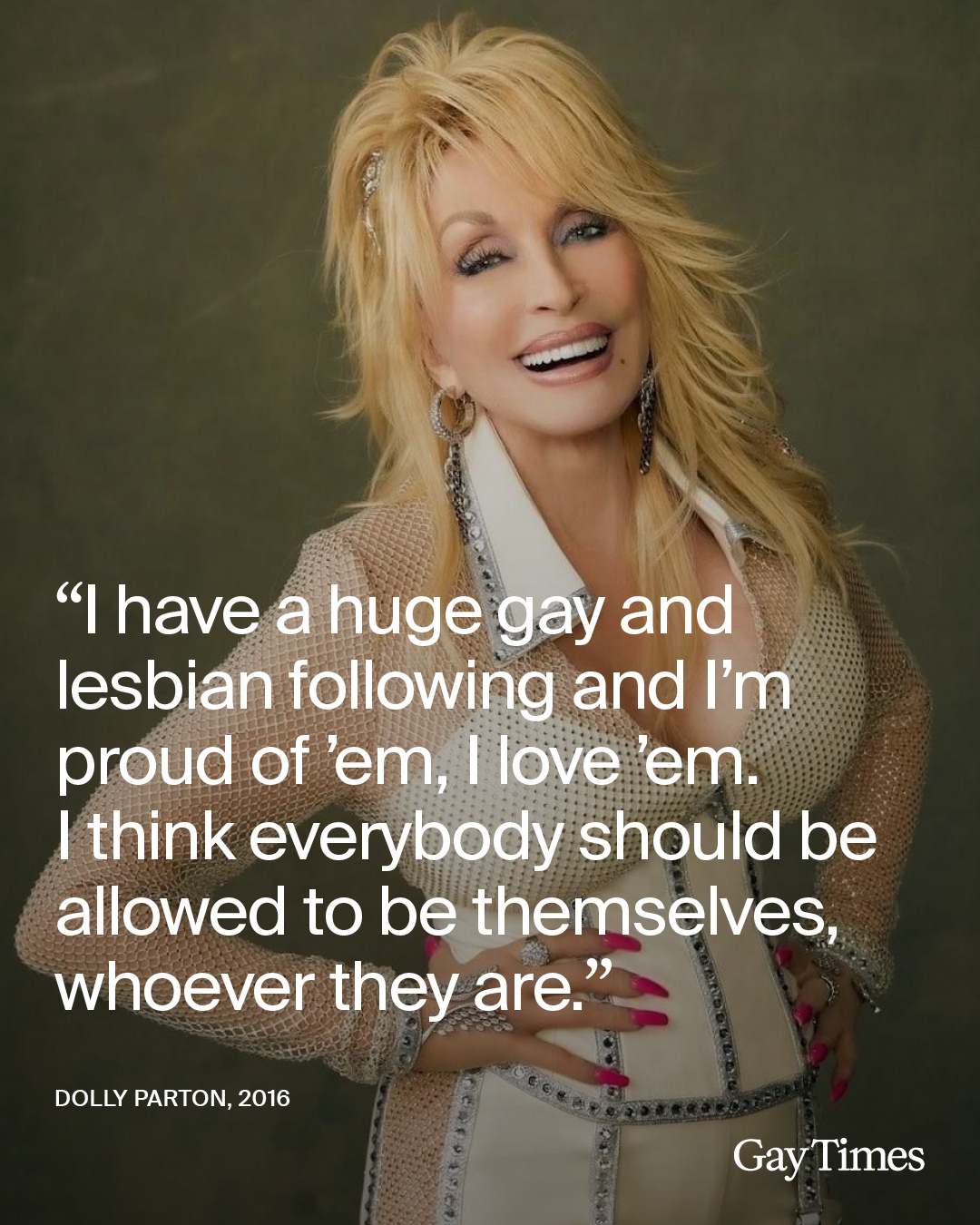
Quotes from Dolly
If I'm honest, her impact on my life has been through sayings that reverberated in our cultural lexicon for decades. As an LGBTQ+ writer I focused on many of those themes here, and some other particularly famous ones.
- "Find out who you are and do it on purpose."
- "If you see someone without a smile today, give 'em yours."
- "If you're gay, you're gay. If you're straight, you're straight."
- On Christians who came after her for it: "Why are you judging people? That's God's job."
- On bathroom bills: "If I have to pee, I'm gonna pee, wherever it's got to be."
- On her queer audience, to the New York Times in 2016: "Sometimes some of them look more like me than I do."
- On the impersonators: "I don't care what they're draggin', as long as they drag it to my show."
- And the one she put on Twitter herself in 2010, that it was a good thing she was born a girl, otherwise she'd be a drag queen.
- "It costs a lot of money to look this cheap."
There are undoubtedly more thorough tributes to this legend. I wanted one that honored her San Francisco legacy today. Rest in Peace, Dolly.
Saul Sugarman is editor-in-chief and owner of The Bold Italic.
The Bold Italic is a not-for-profit media organization, and we publish first-person perspectives about San Francisco and the Bay Area. We operate under a fiscal sponsorship of a 501(c)(3).
You can become a paid subscriber. Or donate. Or learn more about us.
Where I've been lately
Since the last newsletter on Outside Lands, I've mostly been filing more in our What It's Like series. Latest entries include Twin Peaks Tavern, The Riptide, and Zuni Cafe.
I'm also pleased to report that this summer, The Bold Italic has received more than $13,000 in grants. It's been almost exactly a year since I acquired the brand. So while this money doesn't bring us up to full solvency, it's a very big step. And in addition to your support and our donors, I have to thank Independent Arts & Media for making this transition possible.
I had to pause my TBI work briefly this past week so I could get older, lol—it was my birthday. But also: I run a concurrent fashion business and nonprofit, the Stand And Say Something Initiative (SASSI). Longtime readers will know me for pieces like these:
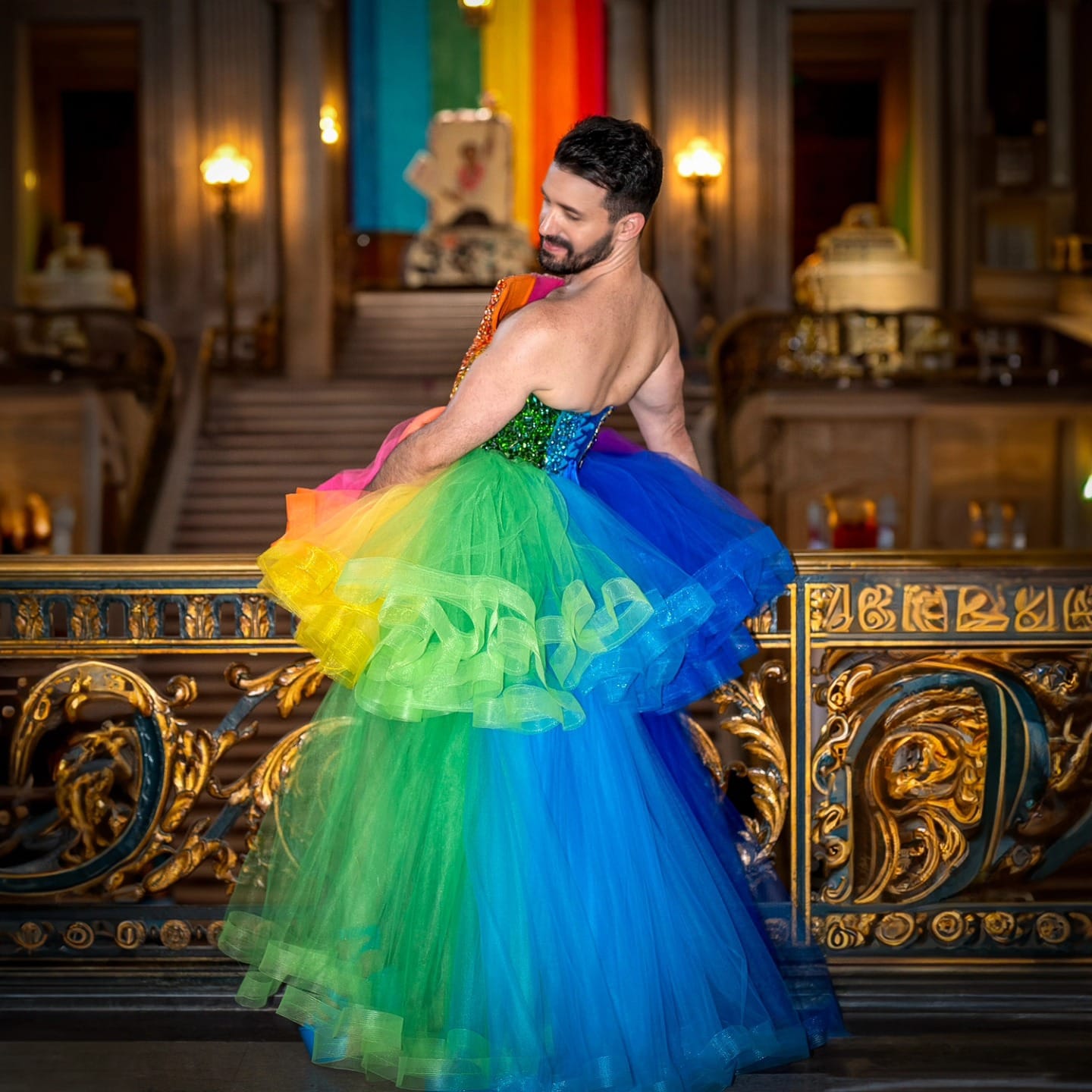
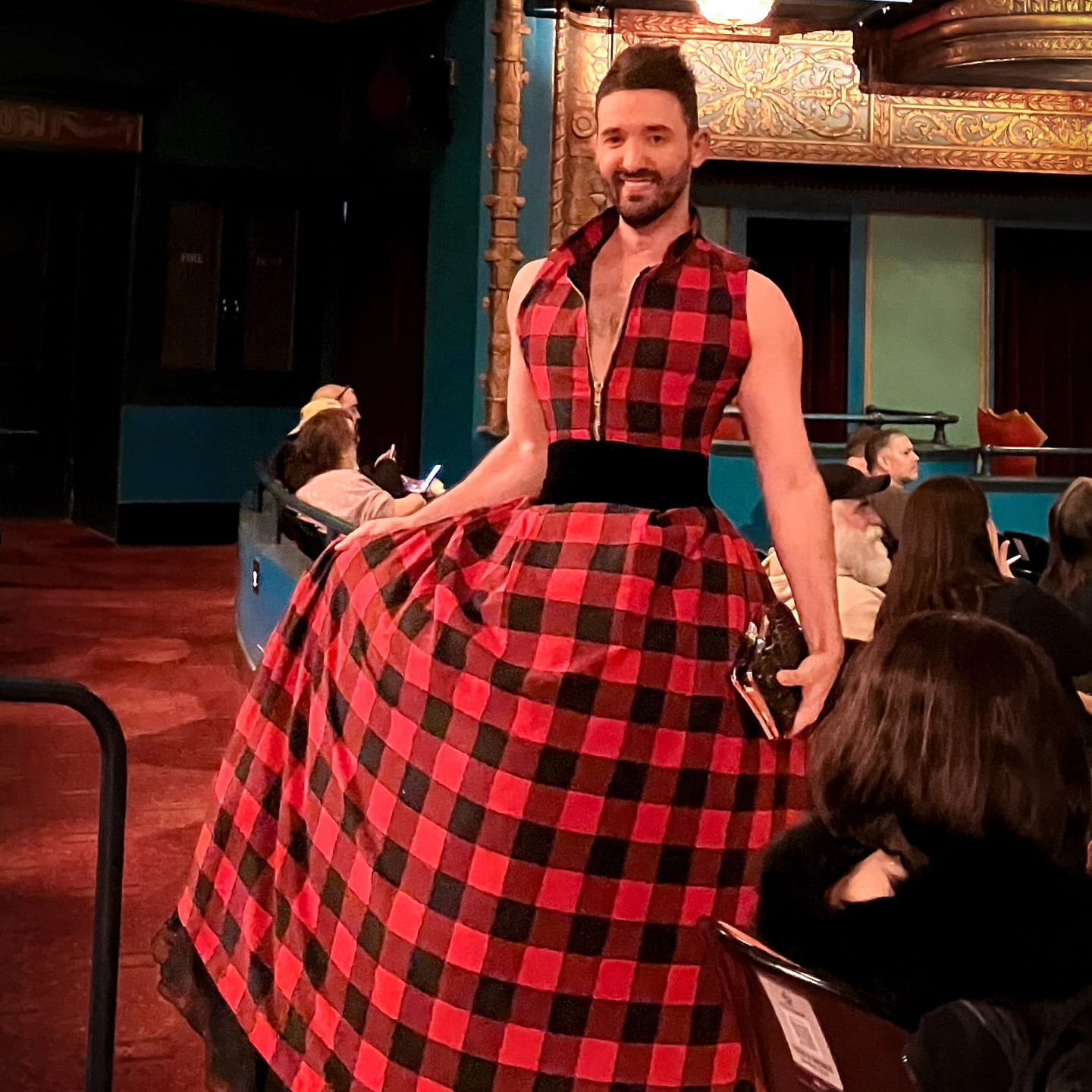
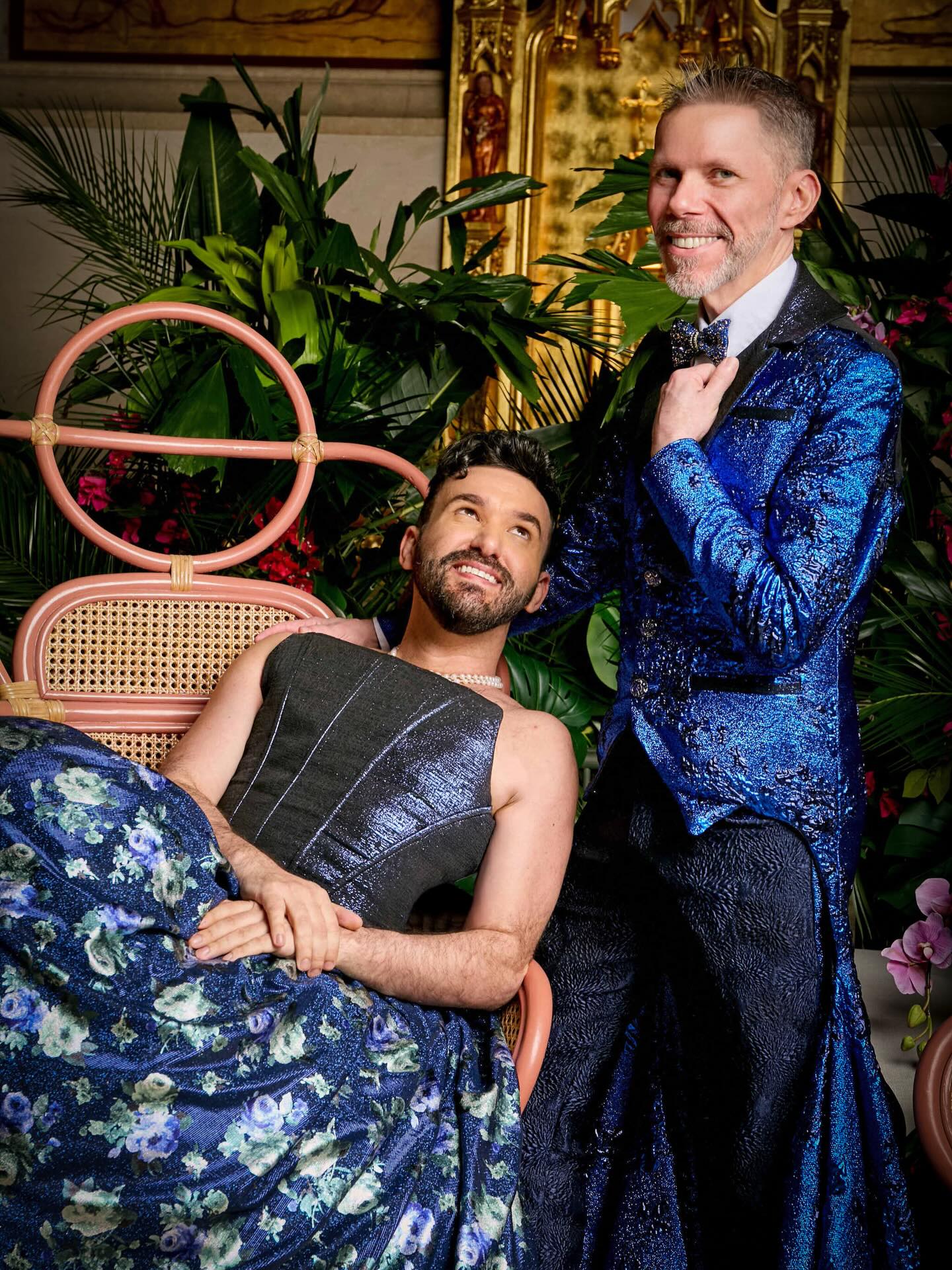
But I have an annual Burning Man customer who monopolizes me around this time of year. Deadlines! I made him a couple pieces this time around. He always gets a new LED jumpsuit:
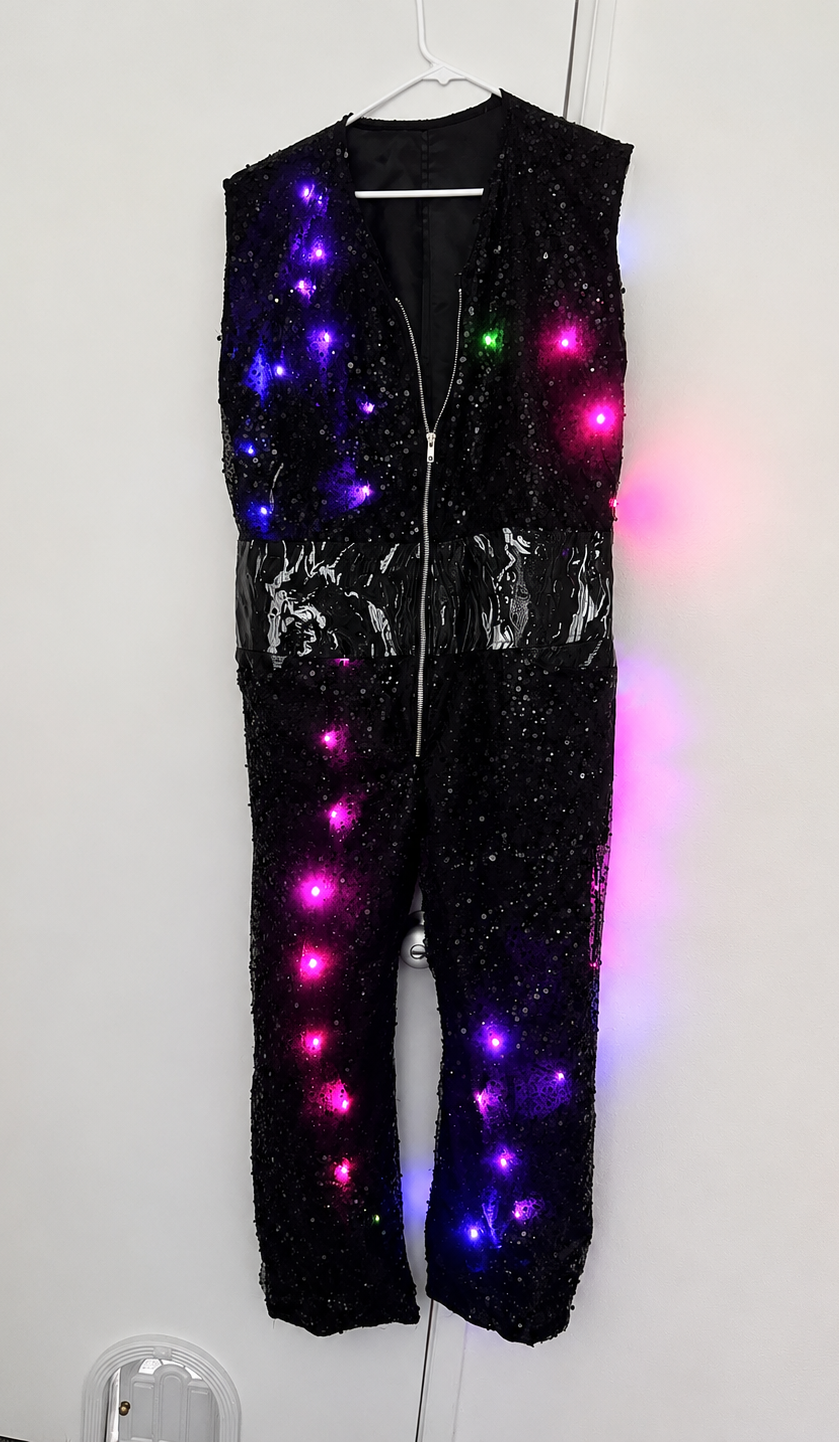
I rarely plug that work here, but it's worth noting I recently received a nice $18,000 for the queer fashion project, SASSI. So if you're in the LGBTQ+ community and want to look fabulous, I can offer some deep discounts on a commission or two. (This is something like making a $2,000 ballgown only cost $500-$1,000.)
And on the Burning Man note
I have yet to sync with our regular writer Adriana Roberts but I will likely attempt to do so. Here are some classic Bold Italic rewinds on Burning Man:
 Adriana Roberts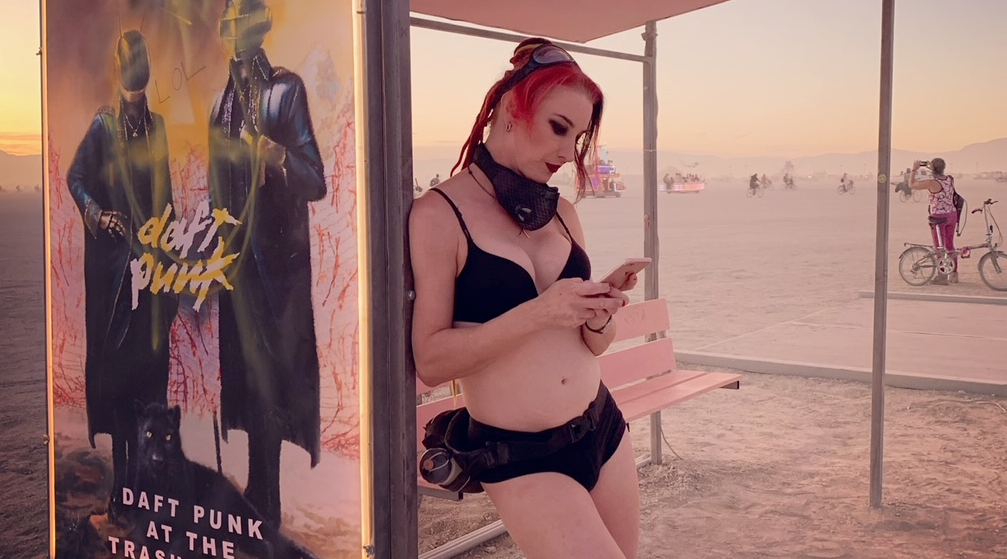
 Ariana Bindman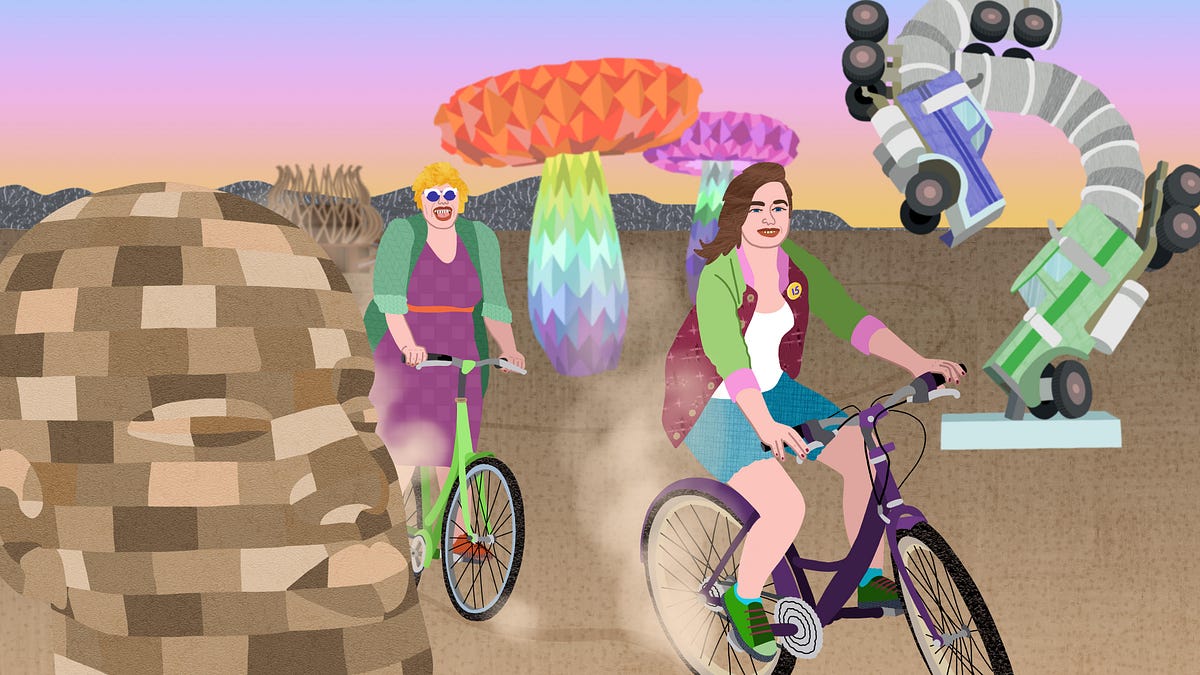
 Nicole Clark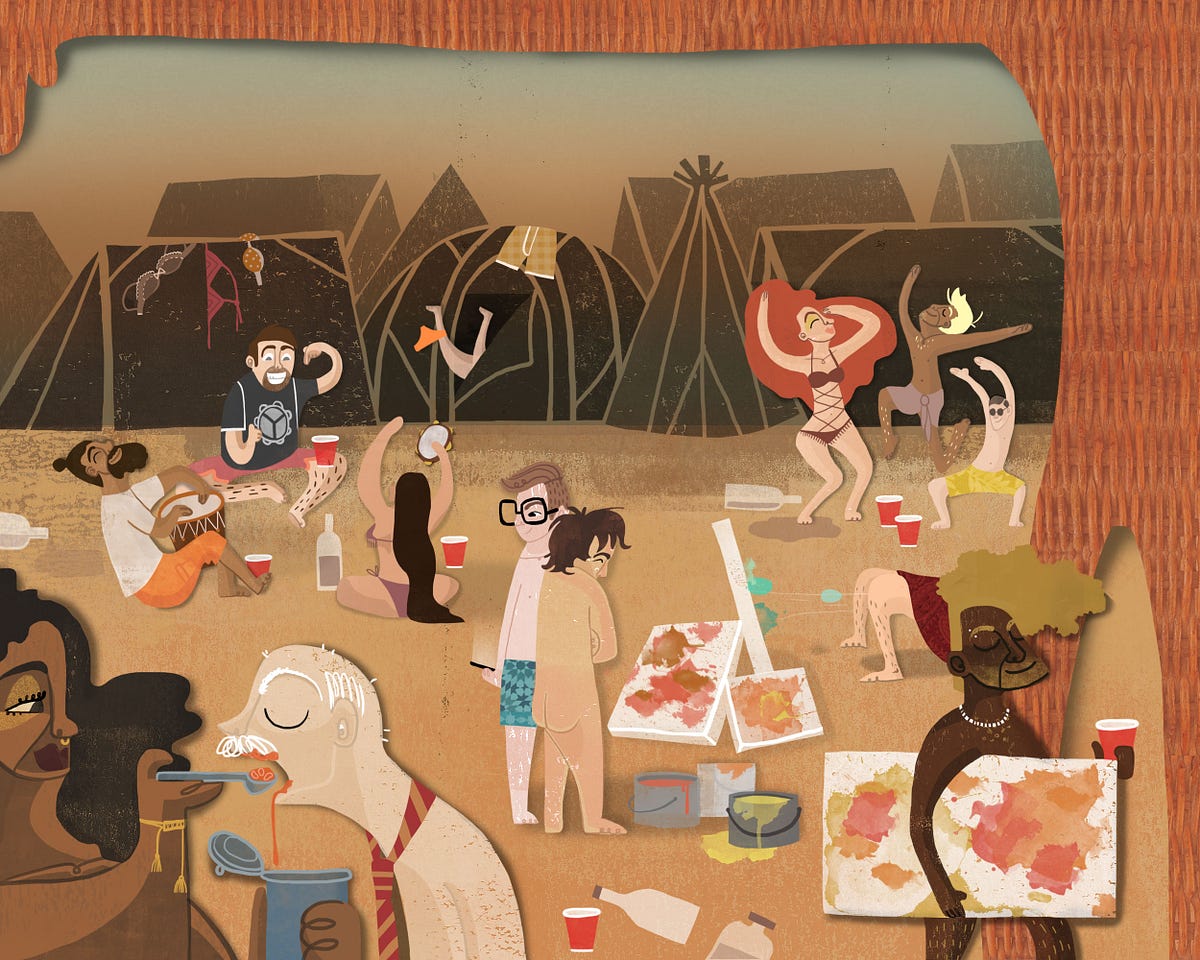
 Adriana Roberts