

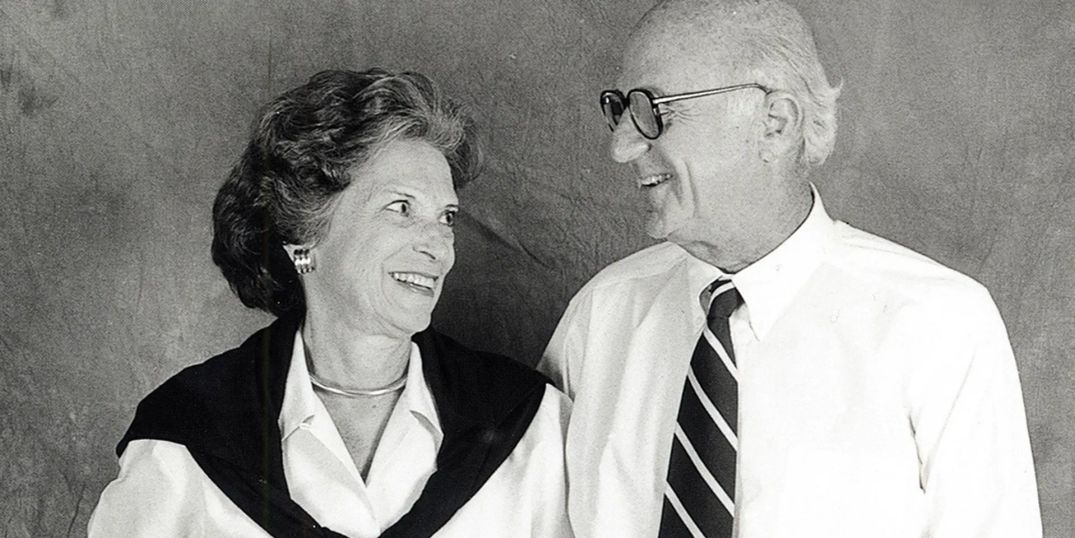
Doris Fisher, who co-founded Gap Inc. with her late husband Donald in a single small store on Ocean Avenue in 1969, and who spent the decades that followed assembling one of the most significant private holdings of contemporary art in the country, died Saturday, May 2, at her home in San Francisco. She was 94.
Gap Inc. confirmed her death on Monday, saying she passed surrounded by family. The cause was not disclosed. Her family, in a note shared with friends, said she lived with purpose and integrity and believed partnership made life richer.
For most of the country, the Fisher legacy is a brand. For San Francisco, it is something denser and more complicated: a global retail empire built here, a 1,100-piece art collection that effectively re-anchored SFMOMA, a Presidio museum that almost happened and didn't, charter school checks, conservative political checks, and a son who took the Athletics out of Oakland. Doris was near the center of all of it, and usually without saying much in public.
A full partner from the first store
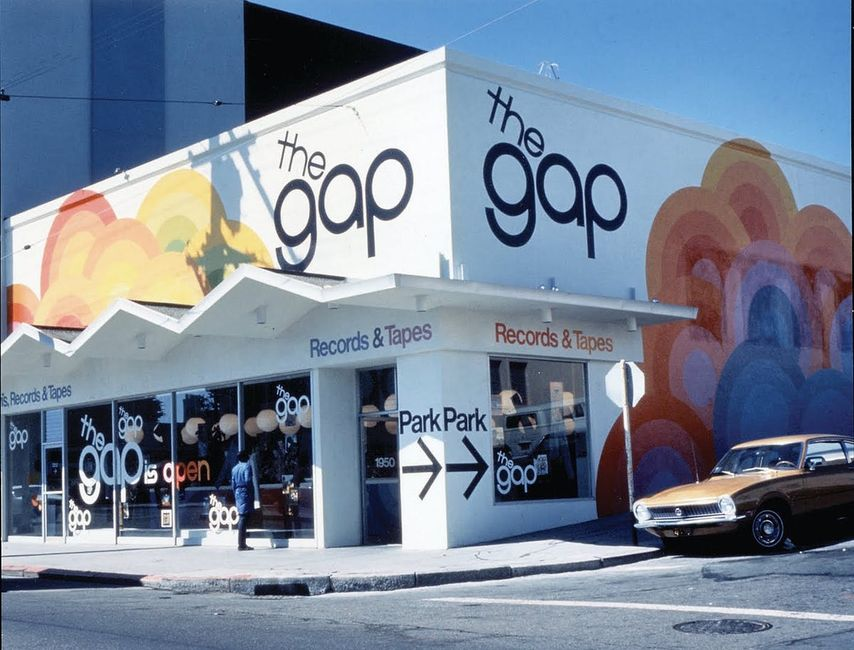
The origin story has been told often, and Gap Inc. has told it again this week. Don Fisher could not find jeans that fit. He left a career in real estate. He and Doris pulled together $63,000 and opened a shop on Ocean Avenue selling Levi's, records, and tapes to a counterculture crowd. She came up with the name, meant to nod to the generation gap between parents and their kids.
 The Bold Italic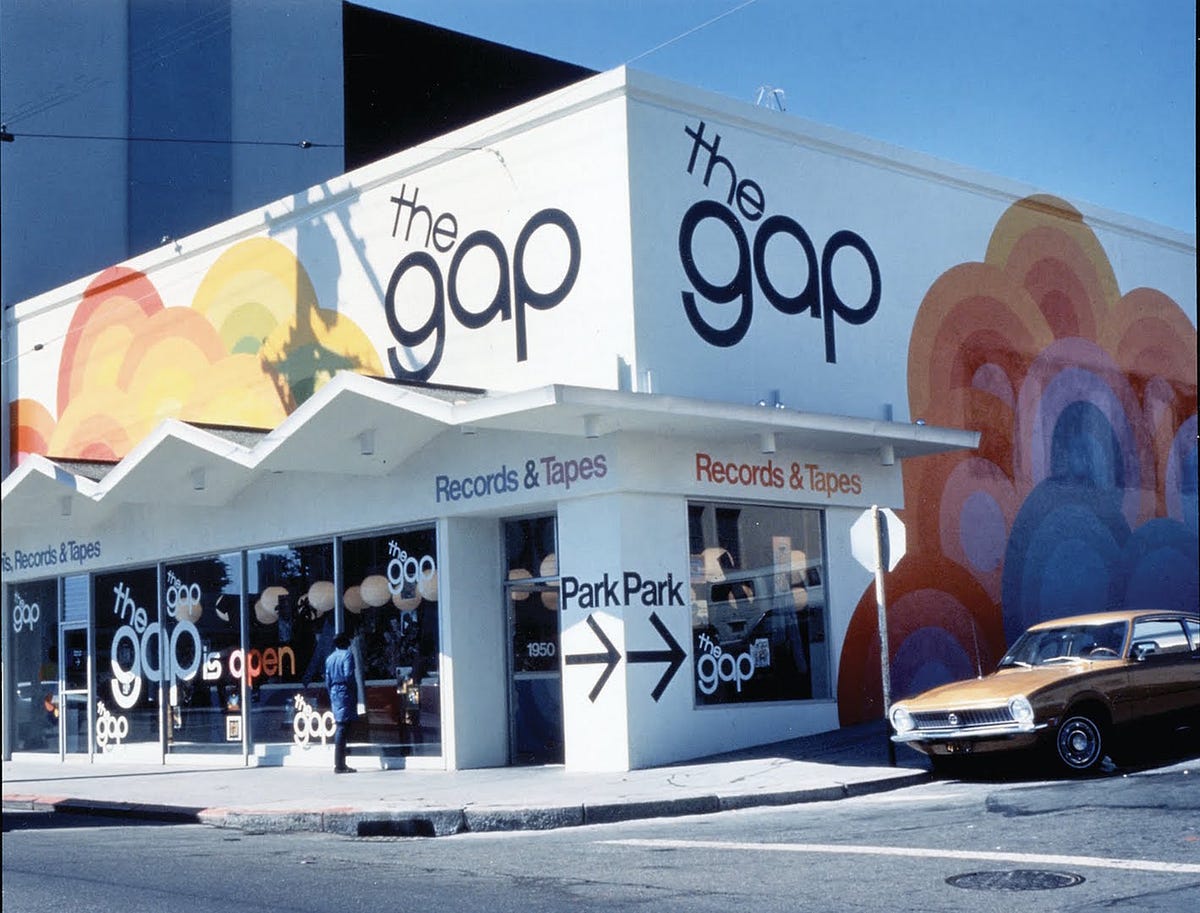
What deserves more emphasis is that Doris was never the spouse-in-the-background that biographies of midcentury businessmen tend to invent. She was the company's merchandiser for nearly four decades and sat on the board until 2009, when she became an honorary lifetime director. Richard Dickson, Gap Inc.'s current CEO, called her a full partner and a path-breaking entrepreneur at a time when that role was rarely available to women. Sonia Syngal, his predecessor, once described her as the company's first working mom and original arbiter of cool.
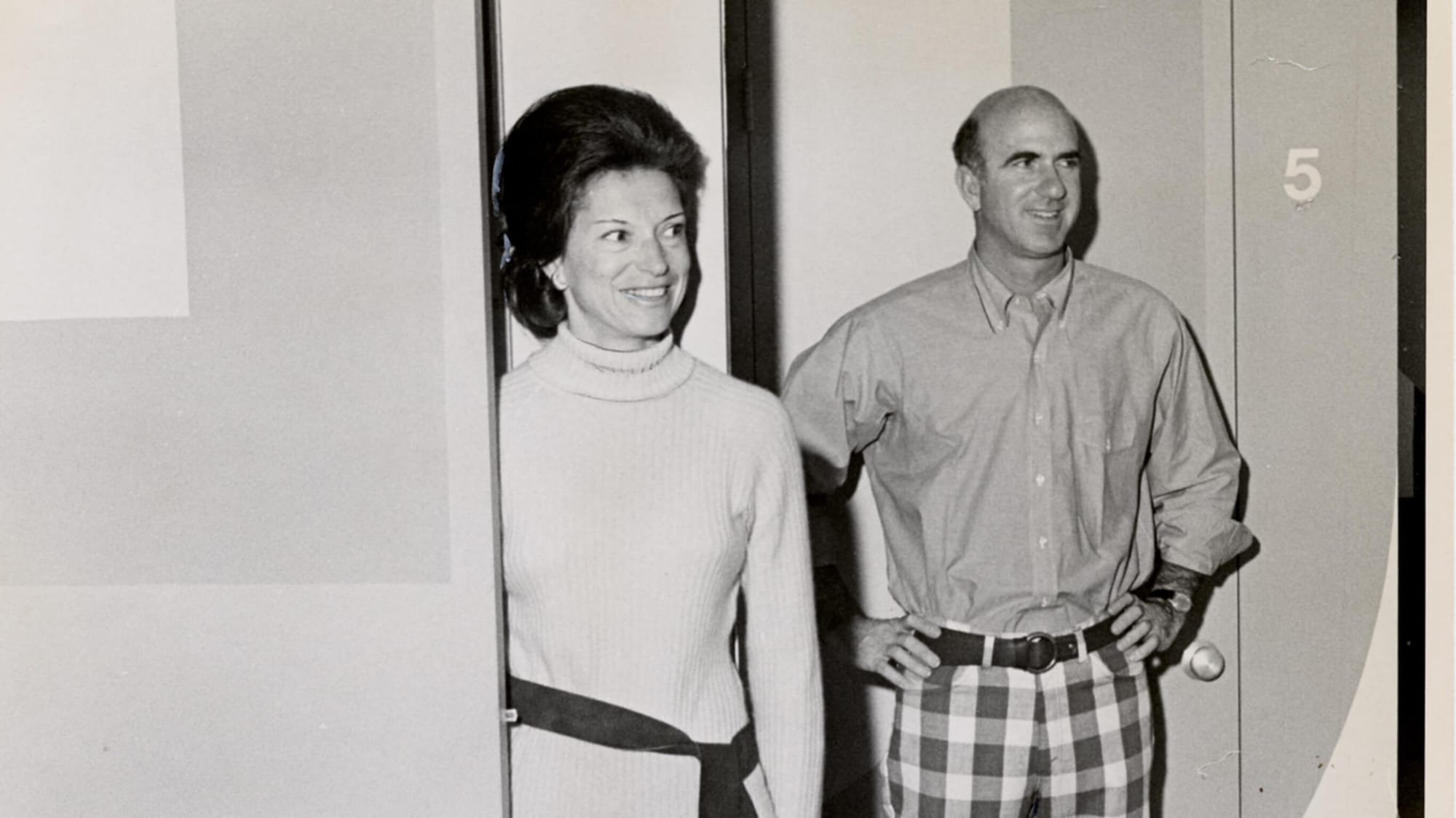
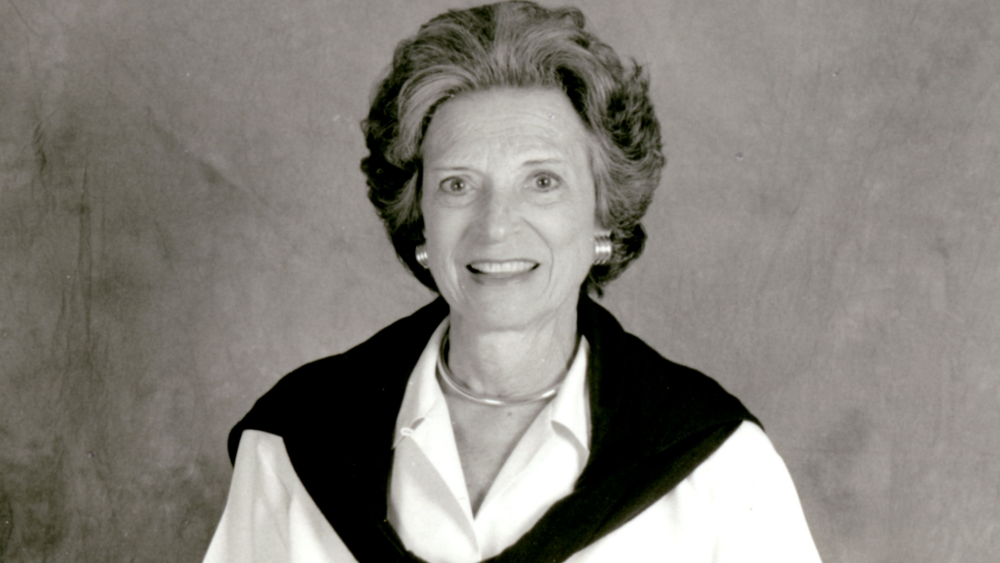
Born Doris Lee Feigenbaum in San Francisco on August 23, 1931, she was the daughter of B. Joseph Feigenbaum, a Harvard-trained lawyer and California state legislator. She graduated from Stanford in 1953 with a degree in economics, one of the first women at the university to do so, and later served as a Stanford trustee.
The collection that almost wasn't San Francisco's
The Fisher art collection began modestly in the mid-1970s, with prints chosen to liven up Gap's offices. Over the decades it grew into roughly 1,100 works by 185 artists, including deep holdings of Calder, Warhol, Agnes Martin, Ellsworth Kelly, Gerhard Richter, Sol LeWitt, Philip Guston, Roy Lichtenstein, and Richard Serra. The Fishers collected without an advisor and made a rule that nothing entered the collection unless they both wanted it.
For years, San Francisco assumed it would lose the collection. In 2007 the Fishers proposed building a private museum in the Presidio. The plan met fierce neighborhood and preservationist opposition and was withdrawn in 2009, months before Don Fisher died that September. In a turn that local arts watchers still consider a near miss, SFMOMA and the Fisher family announced a partnership that same month: a 100-year renewable loan that would make the collection a permanent feature of the museum's expanded building, which opened in 2016.
The deal was unusual, and not without critics. The Fisher Art Foundation retains ownership of the works, and a sizable share of the galleries on three floors of SFMOMA is reserved for the Fisher Collection. Whatever one thinks of those terms, the practical effect on this city has been unambiguous. SFMOMA became a destination it was not before, and the collection became something locals could see for the price of a museum ticket rather than a private invitation.
The timing of Fisher's death lands hard. Just two weeks ago, on April 18, SFMOMA opened Reimagined: The Fisher Collection at 10, a complete reinstallation across four floors with roughly 250 works. Director Christopher Bedford has described it as a fresh narrative about artists and the people who collected them. Doris Fisher lived to see it open.
Philanthropy and politics
Beyond SFMOMA, the Fishers gave heavily to the Knowledge Is Power Program, the national charter school network, contributing more than $70 million over the years and helping shape its expansion. Doris cofounded the KIPP foundation and served on its board.
The Fisher family was among the highest donors to Americans for Job Security, a nonprofit that ran roughly $15 million in attack ads against Barack Obama's 2012 reelection. Doris and her sons Robert and William together gave $9 million, according to Forbes.
John Fisher, who now runs the baseball team Athletics, also oversaw the franchise's deeply unpopular departure from Oakland, a separate story that continues to play out and that locals will weigh against the family's other contributions to the region.
She and Don also gave San Francisco one of its most photographed pieces of public art: the giant red-and-yellow Cupid's Span, the bow and arrow Claes Oldenburg and Coosje van Bruggen planted on the Embarcadero in 2002.
A private person in a public city
Friends and former colleagues consistently describe Fisher as understated, unflashy, and more interested in being effective than visible. She preferred to invest in people and institutions rather than chase profile. The former SFMOMA director Neal Benezra once observed that her aesthetic was quieter than her husband's, with particular love for Agnes Martin and works on paper. The two collections, hers and his, were said to be coherent precisely because their tastes diverged in interesting ways.
She and Don were inducted into the California Hall of Fame in 2011.
Doris Fisher is survived by her three sons, Robert, William, and John, who continue to run the business and oversee the family's philanthropic and art interests, along with grandchildren and great-grandchildren. Don Fisher died in 2009.
The Bold Italic is a not-for-profit media organization, and we publish first-person perspectives about San Francisco and the Bay Area. We operate under a fiscal sponsorship of a 501(c)(3).
You can become a paid subscriber. Or donate. Or learn more about us.
Photos are via the GAP website, courtesy of GAP, and Creative Commons.